January 31st, 2012
| 4 Comments »
Previously in this space, we talked about mushrooms. Specifically, we talked about my quick and decisive learning curve that led me to an all-out lustrous affair with fungus.
Today, it’s all about Beets.
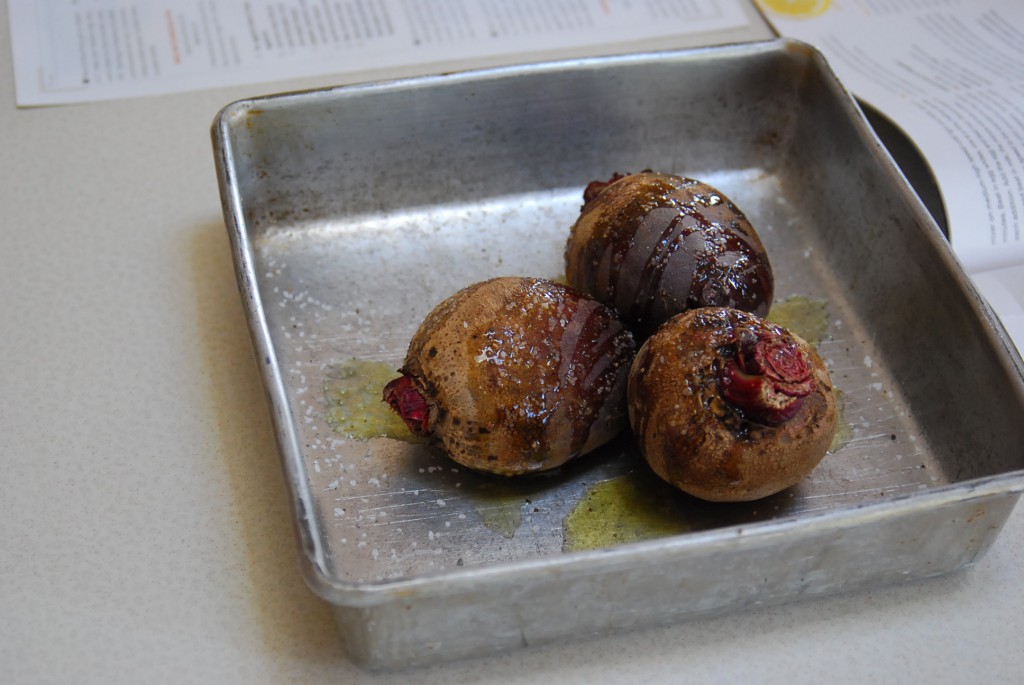
Beets and I had a torrid love affair back in 2009; it was then that I discovered the merits of this earthy root vegetable, one that turns tender and appealing from a long stretch in a hot oven; that it’s earthiness and deep, dark flavor isn’t so overpowering when paired with any number of other ingredients, and most specifically, that the nutrients in this little orb are well worth an incorporation to one’s regular eating. The greens also made their way in to my heart, one of the first to do so, and I believe they were responsible for me learning to love all things dark green and leafy.
Beets have a spectacular nutrient profile, primarily being a superb source of anti-oxidants, with anti-inflammatory and detoxification properties as well. Beets are in the same Chenopod family as spinach, chard and, surprisingly, quinoa. And while they contain an incredible amount of anti-oxidants, it’s the specific ones in beets- lutein and zeaxanthin- that make these vegetables stand out with their nutritional defense for your well-being. Lutein is especially beneficial for eye health, and the anti-oxidant mix in Beets is highly supportive of the nervous system. The anti-inflammatory properties of Beets also support heart health, and can help balance inflammation brought on by Type-2 Diabetes.
But even with all that, many people can’t get past the taste of Beets. They are dark and earthy, and quite honestly, I struggled with them at first, but I discovered that the lovely gold Beets are far less heavy tasting than their red cousins. Once I was able to enjoy the gold, I tried several recipes with the red and found a lot to enjoy about them as well.
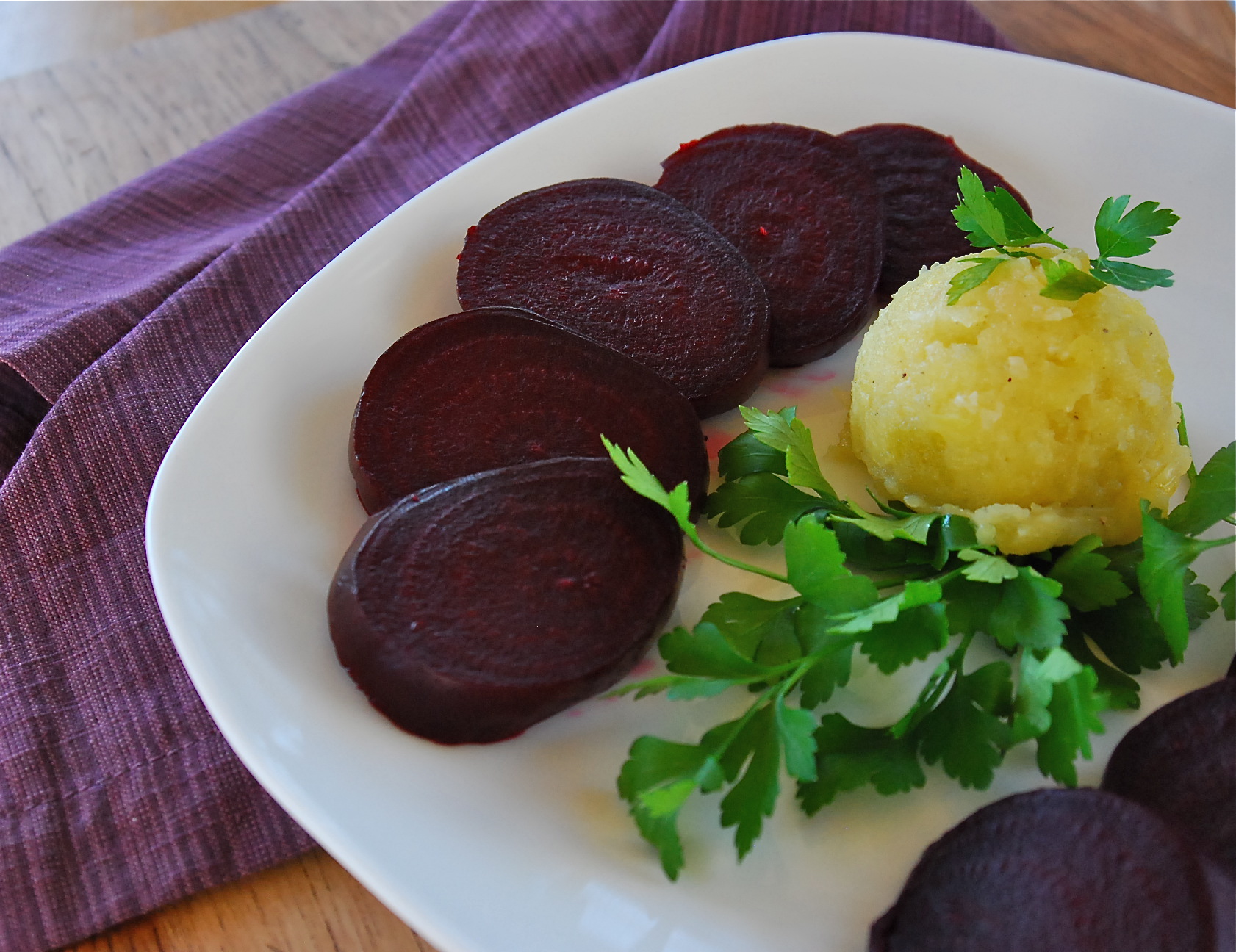
Then, along came this recipe, pairing mellow and tender roasted beets with garlic studded mashed potato in a classic Skordalia. One bite and I was in love. With Beets. Again. Oh the glory…..
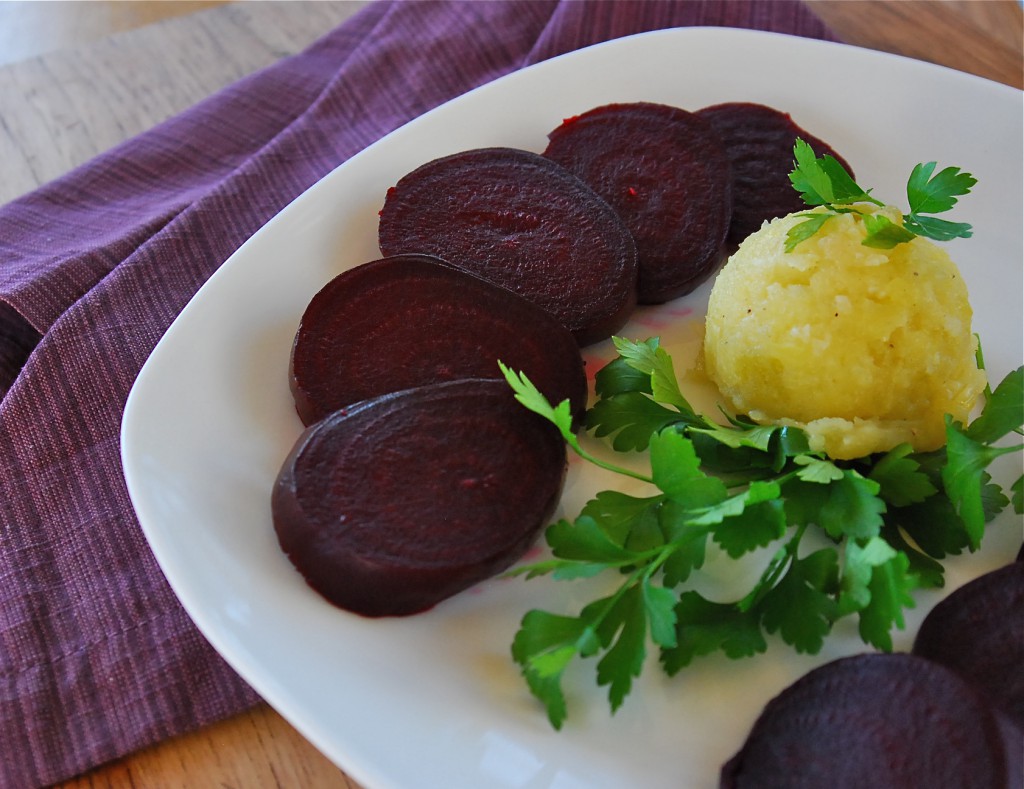
Served warm, with toasted pita bread on the side, this simple, non-fussy dish was rich with flavor and texture. The soft, fragrant potato mix, studded with garlic and thickened with a swirl of a soft, fruited olive oil lends a beautiful contrast to the hearty and tender roasted beets. I would have never imagined that the two of these foods together, both so simple and humble, would be so perfect.
Roasted Beets with Skordalia
4 medium red beets (about 1 1/2 lbs.) trimmed and cleaned
10 tbsp. extra-virgin olive oil
Kosher salt and freshly ground black pepper, to taste
1⁄4 cup finely ground toasted walnuts
1 tbsp. red wine vinegar
6 cloves garlic, smashed and minced into a paste (I sauteed the garlic in some of the olive oil before adding it to the potato for a more mellow garlic flavor)
2 medium russet potatoes,
peeled and cut into 1″ squares and boiled until tender
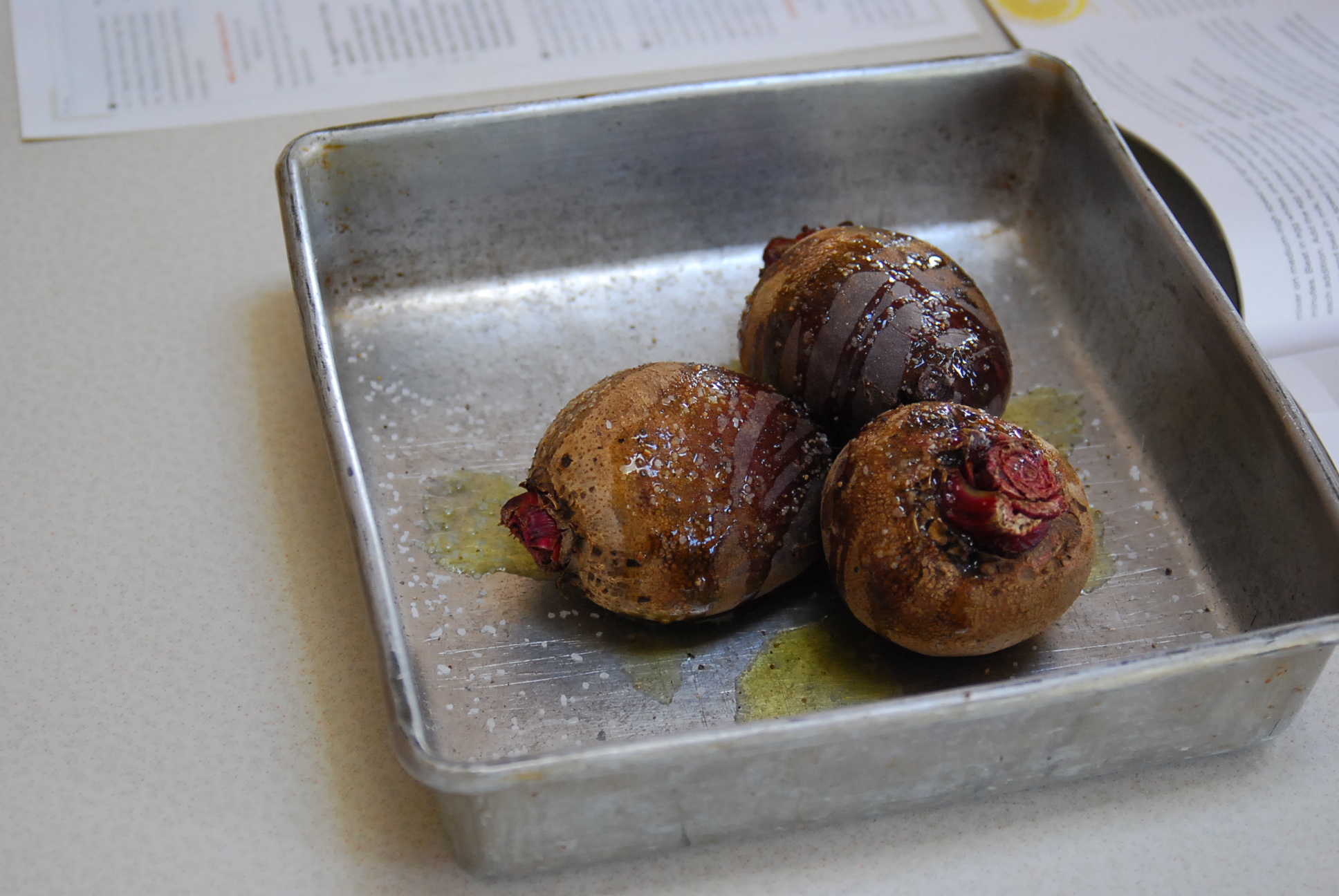
Heat oven to 425°. Put beets in an 8″ x 8″ baking dish and drizzle with 2 tbsp. oil. Season with salt and pepper and pour in 1 cup water. Cover pan tightly with foil and crimp edges to form a seal. Bake beets until a knife inserted into beet slides easily into the center, about 1 hour. Transfer pan to a rack, carefully uncover, and let cool for 30 minutes. Peel beets and cut into 1″–2″ pieces; set aside.
Put walnuts, vinegar, garlic, and potatoes into a medium bowl and mash potatoes until smooth. Vigorously stir in remaining oil and season with salt and pepper. Transfer beets to plates and serve with some of the skordalia spread on the side.
Recipe posted in it’s entirety from the original source in Saveur magazine, issue #131.
January 27th, 2012
| 4 Comments »
January is drawing to a close and we’ve only just now received the first good snowfall to completely cover the landscape. And with only one brief cold snap, where temperatures dropped below zero for a day or two, it really just hasn’t felt much like winter at all. Still, the calendar doesn’t lie, the light still falls off before the dinner hour -although it gets later and later every day!!- and the hum of an oven, concealing something aromatic and delicious is still welcomed in any Minnesota home.
Lemon is everywhere right now. Those bright yellow orbs are certainly popular in the wintertime, bursting forth with that incredible fresh scent. Lemon is like sunshine, and not just from the sunny yellow color; that spritz of luscious lemony aroma that bursts from the rind when you cut into it is a wonderful tonic to the drab and gray of a winter day. I even feel sunnier eating lemon, like the light rays are just pouring through me. And citrus fruits are coming to the cold, lifeless mid-section of the country in all forms; gigantic globes of grapefruit, sunny tangerines, adorable little kumquats and key limes plus endless lemons.
I love to bake with lemon anything, and I particularly love the fresh zest paired with blueberries. But I have to admit that a lemon pound cake can make my knees weak. There is something about that tart bite, and the dense moist crumb that gets me, that makes it irresistible. But I’m not such a huge fan of the calories in pound cake, so finding a recipe that makes a lighter and less caloric version made me eager to try it out. But I had to ask myself…. would this even be worth it? We’ve all had those experiences of finding a less decadent way of baking a prized cake that simply falls flat. I couldn’t stand to be faced with a lemon cake that left me wanting more.
Needless to say, I was not at all disappointed.
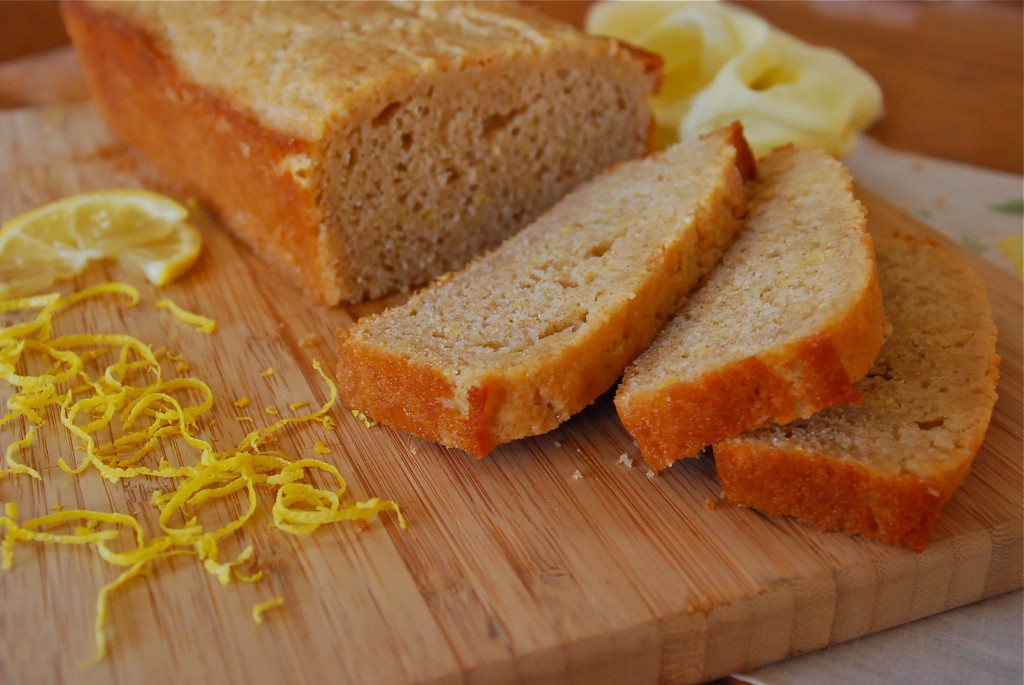
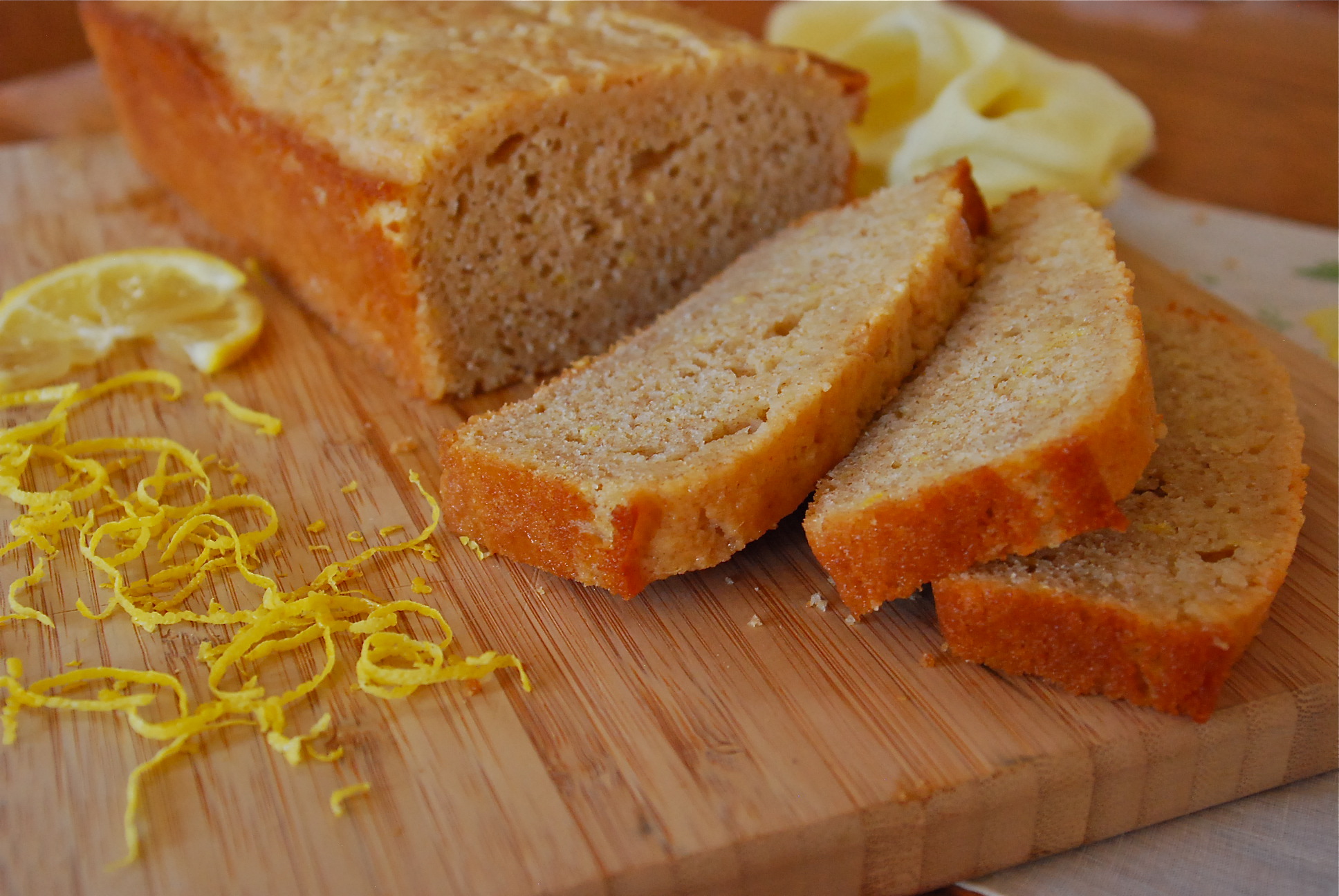
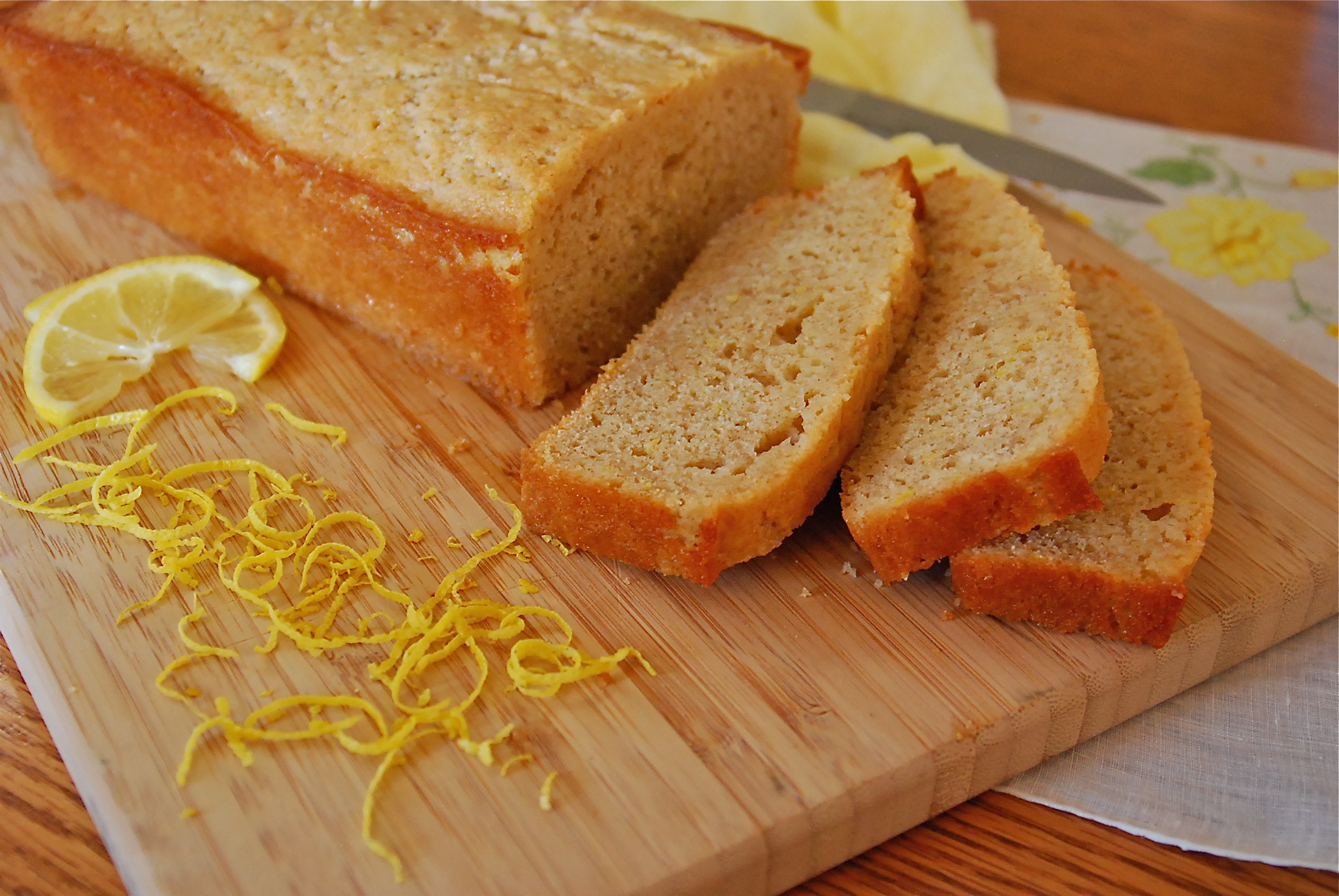
If you didn’t know that this cake wasn’t made with a ton of butter and sugar, you might not realize it at all. It still has that gloriously dense texture that’s rich and satisfying. It still shouts “LEMON!!” with every bite. It satisfies and satiates and makes for a luxurious treat that doesn’t leave you feeling too guilty. There’s a ‘just tart enough’ glaze brushed over the top of it to add even more of that lovely mouth-puckering taste, making the top of the cake nice and soft too, something I love about a good teacake.
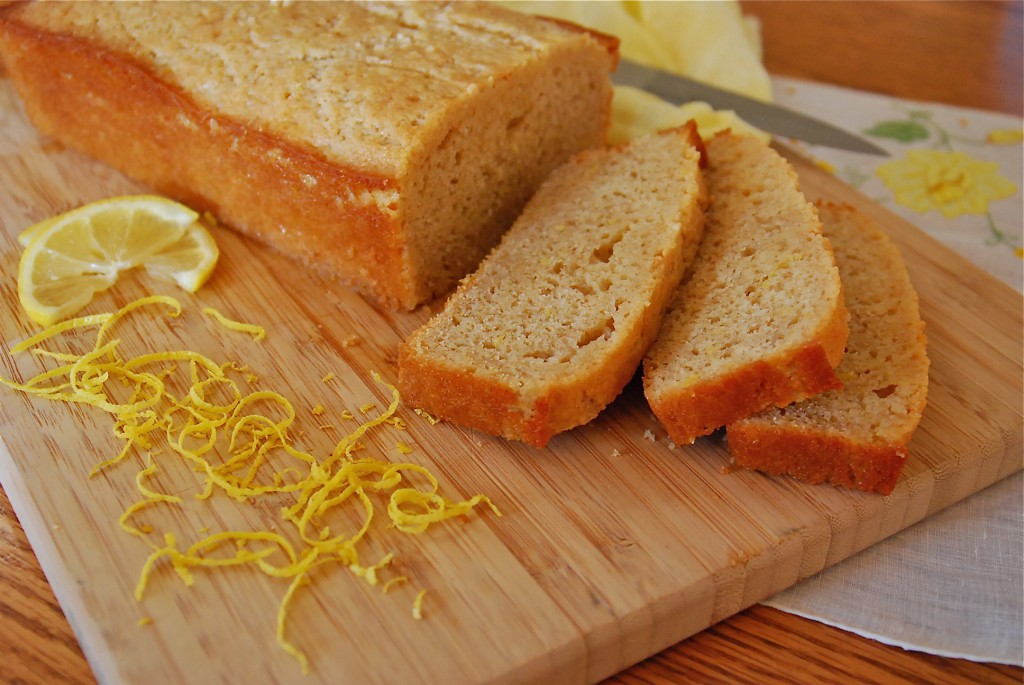
The bright and sunny winter day even made the photos look like they were bathed in lemony light.
Lemon Pound Cake
- 1 cup whole-wheat pastry flour or white whole-wheat flour
- 3/4 cup all-purpose flour
- 2 teaspoons baking powder
- 1/4 teaspoon salt
- 3 large lemons, divided
- 1 1/4 cups sugar, divided
- 3 ounces reduced-fat cream cheese (Neufchâtel), at room temperature
- 2 tablespoons butter, at room temperature
- 3 large egg whites, at room temperature (see Tips)
- 1 large egg, at room temperature
- 1/2 cup reduced-fat milk
Preheat oven to 350°F. Coat a 9-by-5-inch (or similar-size) loaf pan with cooking spray; dust with flour and tap out any excess.Sift whole-wheat flour, all-purpose flour, baking powder and salt together into a medium bowl.
Finely grate 2 tablespoons zest from 2 of the lemons; set the lemons aside. Beat 3/4 cup sugar, cream cheese, butter and the zest in a large bowl with an electric mixer on medium-high speed until light and fluffy, about 2 minutes. Beat in egg whites, one at a time, beating well after each addition. Add the egg and beat well. Reduce speed to medium and beat in milk; the mixture will look curdled.
Reduce the mixer speed to low and add the flour mixture in 2 batches, beating just until combined and scraping down the sides of the bowl as necessary. Transfer the batter to the prepared pan and smooth the top with a rubber spatula.
Bake the cake until a wooden skewer inserted in the center comes out clean, 45 to 50 minutes. Cool in the pan on a wire rack for 15 minutes. Run a knife around the sides and turn the cake out onto the rack.
While the cake is cooling, squeeze 5 tablespoons juice from the zested lemons. Trim the ends off the remaining whole lemon and very thinly slice; discard any seeds. Heat the lemon juice and remaining 1/2 cup sugar in a small nonstick skillet over medium heat, stirring until the sugar is dissolved. Add the lemon slices and cook, stirring frequently, until softened, about 5 minutes. Reduce heat to maintain a simmer. Use a fork to transfer the lemon slices to a bowl. Continue simmering the syrup until slightly thickened and beginning to turn golden yellow, 2 to 4 minutes
Set the rack over a rimmed baking sheet. Poke holes all over the top of the warm cake with a wooden skewer, 1 1/2 to 2 inches deep. Spoon the glaze over the cake, poking more holes if the glaze does not sink in. Arrange the lemon slices on top. Let the cake cool completely before slicing.
Recipe Notes: I made my cake with the glaze, and not the candied lemon slices. I tried, but they fell apart in the syrup and looked strange so I didn’t put them on the cake. The glaze was good, but I think the cake doesn’t really need it either.
Recipe from Eating Well magazine, posted in original form.
January 24th, 2012
| Comments Off on call of the wild
January 23rd, yesterday, I strapped on my cross-country skis for the first time this winter.

This Winter, waiting for snow cover deep enough to kick through has nearly killed me in anticipation, especially given that last year I was out almost every week between late November to well through March. Every snowfall that came our way found me holding my breath, anxiously awaiting the perfect amount that never came.
Certain activities are just part of who I am. Cooking, for one. But this, the strapping on of tiny thin skis, grasping the little poles and facing an open path of fresh snow, wind in the trees and clouds scuttling overhead is also a part of me that goes back to moments in childhood that seared to my brain like fire. I don’t even know how old I was the first time I put on the skinny skis. But I was a kid, and our school class went to a golf course one winter day, lush with a endless expanse of unbroken snow and we all were given those skis, the long poles and funny shoes and we set out over the empty golf course, where it clicked within me.
And in repeated winters, over growing years, those endless snows spread out in front of me as I faced them, tall poles in hand, face to the wind. Then at some point, they just stopped. But the call within me never left and finally several winters ago, I urged Mike to get ski packages and join me on the trails. It was one of the best decisions we’ve ever made.
Because the first time I headed along a trail, pushing every muscle from shoulder to ankle over the snow, I felt that thrill again. I felt the flood of oxygen to every working muscle. I felt the quiet cold air and saw those dancing clouds. I felt alive again, working with muscles that still held the perfect memory of how this was done, even though it had to be more than 20 years since we’d moved in this way. I marveled at a body that remembered, when I had nearly forgotten; marveled at muscles that snapped into recall, pulling memory from some long ago moment in time. And I wondered why I’d stopped.
There is a tiny little park near our house; hardly a spot on a map but it’s flat, and just large enough to make for a perfect workout. I carve a trail around the perimeter, and go four, five six, sometimes eight laps or more around that park. It’s enough to make my lungs pump fiercely. It’s enough to drench me in sweat. It’s plenty, and it’s close and it’s 45 minutes to an hour of intense cardio work. If I can do this a few times a week, it’s all I could ever ask for from Winter.
The snow flies, and I hear the siren call from the trails. Yesterday was that call, and barely a half hour after I was home from work, I faced that empty park, with a wicked cold Easterly wind on my back and stepped in to my skinny skis. The first path over the snow cuts my trail, and every lap gets easier as I go. My lungs engage, my muscles warm, the wind doesn’t seem so bitter and Winter doesn’t seem all that long anymore. It’s just me and the snow.
It’s Just Write Tuesday, Version 19.0.

January 18th, 2012
| 7 Comments »
I did not grow up loving mushrooms. I didn’t even like them, not one little bit. But I surely can’t blame myself, for my only exposure to them as a child of the ’70’s was from a can. And I can’t imagine anything more disgusting than canned mushrooms to a kid. No wonder I was never a fan of the fungus.
As I got older, I allowed a bit of mushroom to pass my lips; I loved them sauteed on a burger, or with a grilled steak. Provided I could have something in my mouth with them, they became only slightly more palatable to me, but I still struggled with texture, and that rich, loamy earthiness to them. Cover them with good red wine, and sauté them in copious amounts of butter and it was ok. Just ok though. Still, they weren’t on my favorites list by any means.
Then I had an epiphany, last summer. A major turning point in my culinary taste occurred at one of the wonderful events I attended last year with the Minnesota Food Bloggers group. It was at Cafe Levain in Minneapolis, and Chef Adam Vickerman created grilled portabella mushrooms, richly glazed in balsamic vinegar. I took a few tentative bites of them and my eyes were opened. I was re-born, re-newed and suddenly, all-out crazy for mushrooms. And to Adam’s credit, I’ve been slightly obsessed, and eating them weekly, ever since.
Mushrooms fit well into a healthy eating plan, and that makes them far more desirable given my all-enveloping obsession. Mushrooms have been revered in Eastern culture for thousands of years for their nutritional properties. Mushrooms are low in calories, fat-free, cholesterol-free and very low in sodium, yet they provide important nutrients, including minerals like selenium, potassium, copper, and vitamins such as riboflavin, niacin (the all important B vitamins) and vitamin D. And then there’s beta-glucans- something I’d never heard of before, and according to Mushroom Info:
“Beta-glucans, found in numerous mushroom species, have shown marked immunity-stimulating effects, contribute to resistance against allergies and may also participate in physiological processes related to the metabolism of fats and sugars in the human body. The beta-glucans contained in oyster, shiitake and split gill mushrooms are considered to be the most effective.”
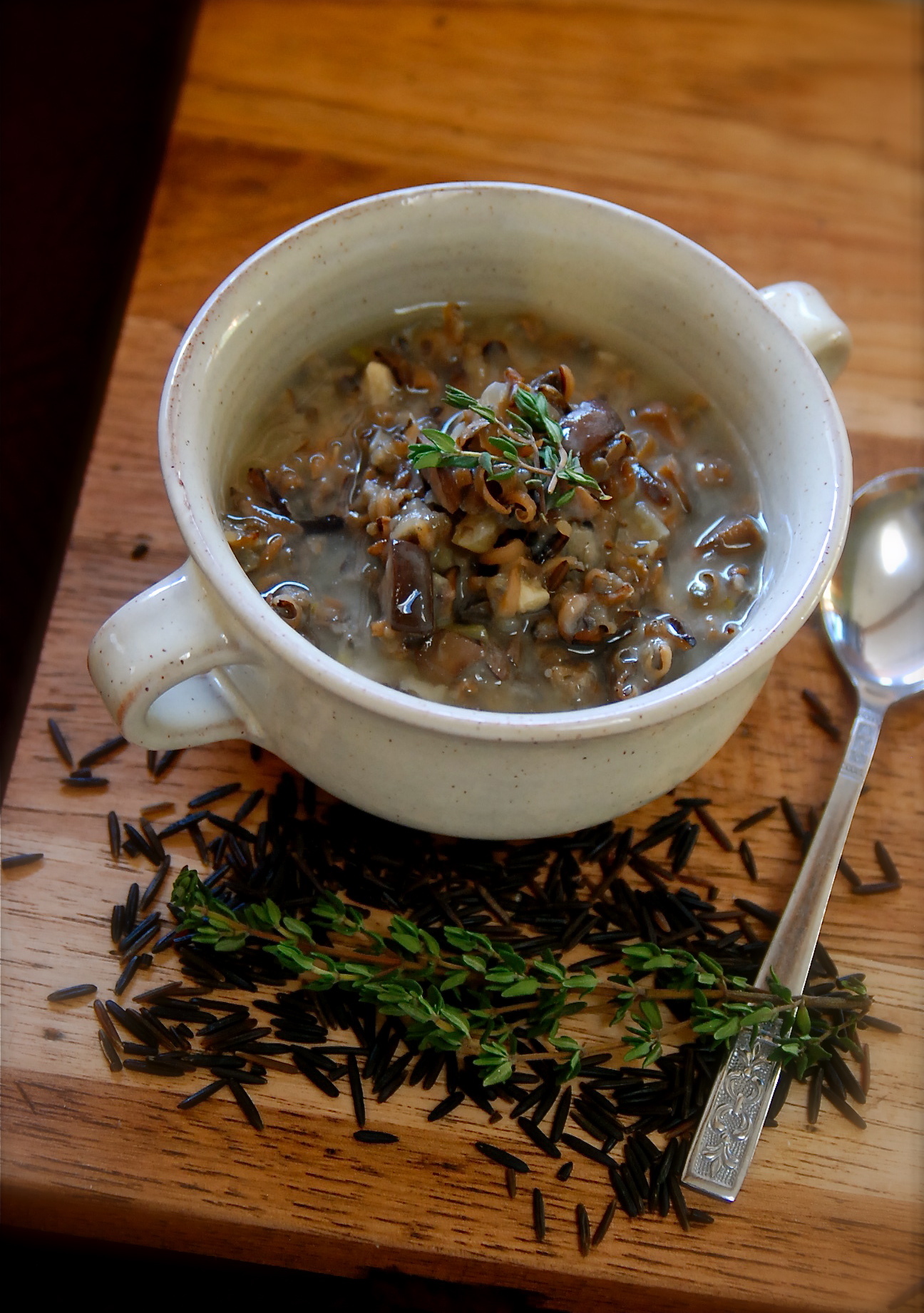
So I can feel good about the amount of mushrooms passing my lips, and I like that. I can incorporate mushrooms in to just about any dish, but I hadn’t really done much with them in a soup so it was fun to come across this amazing Wild Rice & Mushroom soup recipe on The Kitchn, even better that I stumbled upon it as the coldest air of the month landed on Minnesota, making for a perfect backdrop to a steaming bowl of this thick and hearty soup.
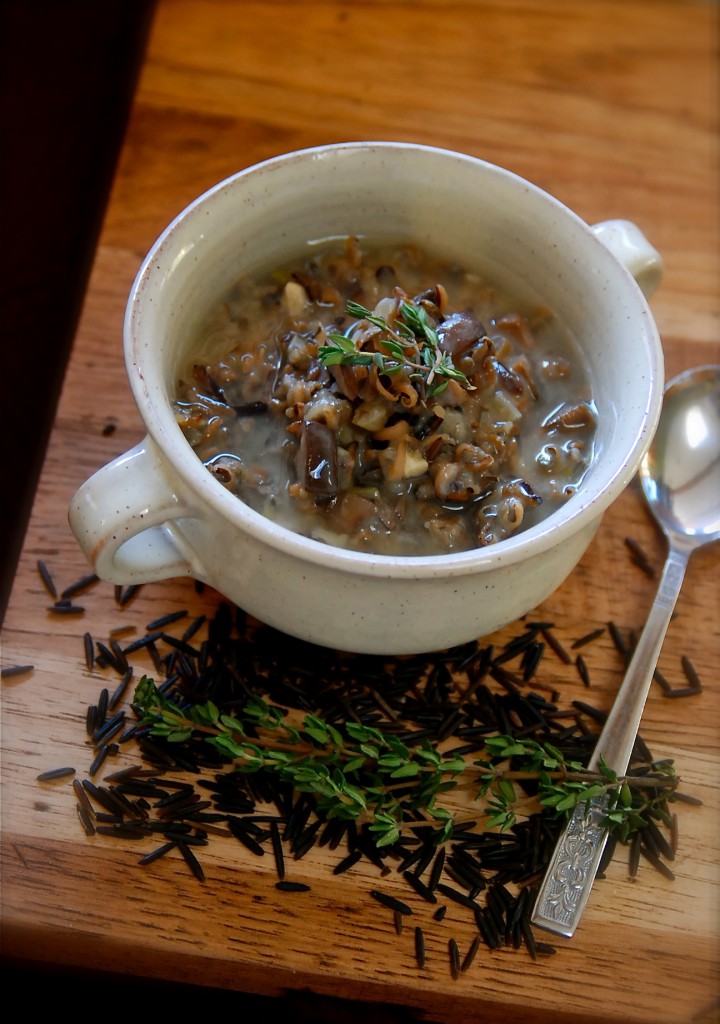
If you love a good wild rice soup with chicken, or turkey, you’ll love this lush recipe, which deeply browns mushrooms to develop their rich flavor. A bath of white wine and some good vegetable broth helps round out the simple but complex flavors. Wild rice was another food item I had to learn how to love, but thankfully, this wasn’t that difficult, and we’ve been enjoying wild rice soups for years. This one, with it deep earthy flavors and thick broth will be on repeat now. We all loved it, and soup is such a good leftover item to have on hand.
Wild Rice and Mushroom Soup
1 c. wild rice, washed
1 large onion, diced
4 celery stalks, diced (I love the flavor of the leaves and used a lot of those)
2 cloves garlic, minced
1 pound of mushrooms, rough chopped (I used baby portabella, but adding some porcini or oyster would be delicious)
1 t. fresh thyme
3 T. AP flour
1 c. white wine (I use pinot grigio in cooking. DO NOT use cooking wine from the grocer. Ugh)
1 Bay leaf
1-2 cheese rinds, optional
2 t. fresh rosemary, chopped
1 c. whole milk or heavy cream (I used a lot less, but adjust according to your taste)
1 T. cider vinegar
Salt and fresh ground pepper
Bring a pot of water to a boil and add the rice with 1 teaspoon of salt. Reduce to a simmer and cook for 40-50 minutes, or until the rice has burst open and is soft. You can leave it a bit underdone if you wish, and cook it to taste with the final soup. Drain the rice, reserving the cooking water to use in the soup if you wish. (I did this. Wow. What a flavor)
Meanwhile, heat a teaspoon of oil in a large dutch oven or stock pot over medium-high heat. Add the onions and celery with a pinch of salt and cook until softened and translucent, about 5-7 minutes. Turn the heat down to medium and add the mushrooms and another pinch of salt. Cook until the mushrooms have released their liquid and start to brown; this should take anywhere from 20-40 minutes depending on the size of your stock pot. I cooked them to a really deep brown. Don’t skip this step as this is where a lot of the flavor of your soup will come from.
Once they are nicely browned, add the garlic and thyme and cook for about a minute. Sprinkle the flour over the vegetables and stir to coat. Stir the flour until the mixture becomes sticky, and no visible dry flour remains. Increase the heat to medium-high and add the white wine. Stir and scrape the bottom of the pan, simmering until the wine has reduced and thickened.
Add the bay leaf, cheese rinds (if using) and stock or the cooking water from the rice. Bring to a boil, then reduce and simmer for about 20 minutes to blend the flavors. Add the rosemary, milk or cream and the wild rice, cooking for another 10-15 minutes, or until the soup has thickened to your liking. Stir in the cider vinegar, season with salt and pepper to taste.
Original recipe from The Kitchn, by Emma Christenson.
***This soup will thicken as it stands, and the rice absorbs more of the liquid. I’ve found that when re-heating it the next day, it tastes best to scoop out a serving and add water to loosen it up.
Linking up to Soupapalooza 2012!!
“Come join SoupaPalooza at TidyMom and Dine and Dishsponsored by KitchenAid, Red Star Yeast and Le Creuset”
January 17th, 2012
| 7 Comments »
See anything new???
A new year is a good time for change. And a good time for a re-design, whether with your life, or with your blog. I’ve been swerving back and forth over the past year on what the focus of this blog really is, and it’s pretty clear that it’s been changing a lot. It’s gone from strictly recipe focused to opening the door, just a glimpse, in to what goes on in my head, my heart and my life. So it’s really not a food blog any longer. But yet, it still is.
My on-line friend Lisa posted something today that blew me backwards a bit. And when I righted myself, and read it again and again, it sank it’s teeth in to me and held tight. She’s gotten so far away from where her blog had originated that she contemplated shutting it down. {{and haven’t we ALL been there, at least once or twice??}} But then a friend of hers said “This space has become more of a savings account for things you like, rather than purely recipes as it was.”
Well, that’s what blew me backwards because it was exactly what my mind was trying to find in regards to this space of mine. So, in addition to a new, fresh and modern look, with some more muted color schemes, I also changed the tagline of the blog. See it over there on the upper right side? It used to say ‘the evocative fare and delicious stories of a passionate cook’.
Now it just says what this treasured space of mine has become: a blog of food and life. Because when it comes down to it, there is no life without good food. And there is no good food without a richly varied life.
I’ll be updating the Recipe Index a bit more too, but to start, I wiped it clean of really old posts, with recipes that are no longer relevant, and photos that made me cringe. If you go searching my site for a recipe, I want it to be the best one I can offer as that’s the least I can do. And if you ever come across a dead link, please let me know and I’ll set it right again.
We’ve also got icons for my Facebook page if you wish to keep updated on my posts that way, and another one so you can come and hang out with me on Twitter.
Ready for another spectacular year?? I am!!
January 14th, 2012
| 5 Comments »
The cuisine of India is one of my favorites, almost hands down. I love the vibrant flavors and colors, the spice and aroma and the endless variations. I love the lentils, the vegetables, the breads and condiments. All of it.
I’m not alone in my love for this aromatic and delicious foods, and recently a group of my closest friends and I decided to get together one evening for Curry Night. We’d spent a talkative morning over coffee chatting endlessly about food and hit upon the topic of Indian food, each sighing in joy, rolling our eyes and declaring it’s lofty place in our lives. Paired with an intense desire to get our husbands in the same room together, we planned, plotted and perfected our recipes, and on an unseasonably warm January night, we carried fragrant dishes to Amanda and Brian‘s beautiful brownstone apartment in St Paul and gathered, loudly, to enjoy this amazing food, and some well deserved face time. The holidays, with their obligations and frenetic pace had kept us apart far too long and we needed a night together of food, wine, chatter and fun. The entire evening was a wonderful and delicious, with much needed laughter and camaraderie.
Dhal Makhani is one of my most favorite lentil dishes to order when I go out for Indian food, but I’d never attempted it at home, mostly due to the absence of an easy place to buy the requisite black beluga lentils required. But when a shipment from Marx Foods landed on my doorstep, with 8 2-lb containers holding a rainbow of colored lentils, all I needed was a good recipe. And an excuse.
Thankfully, I found both.
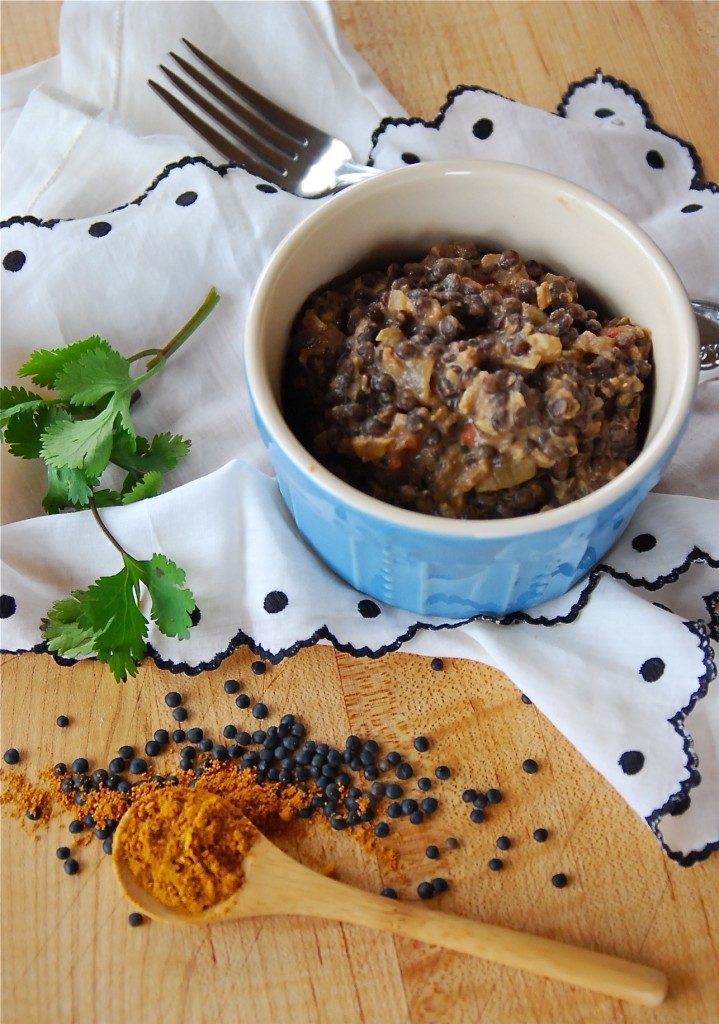
Lentils, as a food, don’t win many beauty contests. What they are beyond their rather homely end result is a quick-cooking, nutritional little powerhouse. This dish was deliciously fragrant and hearty; black lentils hold their shape beautifully after cooking, and with the right amount of garlic, ginger and onion, along with the heady blend of spices that make up many Indian dishes, this recipe was glamorous with flavor and it smelled simply amazing. A thin drizzle of cream gives it a wonderful rich taste, and it evolves over time and a day in your fridge to gain in taste what it lacks in eye appeal.
This recipe can easily be made vegan by eliminating the heavy cream, substituting an alternate of choice. It has no meat in it at all.
Dhal Makhani
1 cup black lentils, washed and picked over
2 large onions, minced
2 green chilies, sliced (remove seeds and inner membrane for less heat, if desired. I used jalapenos)
2 large tomatoes, peeled and chopped into cubes
2″ piece of ginger, chopped
1 T. garlic, minced
2 t. ground coriander
1 t. ground cumin
1/2 t. red chili powder
1/4 c. heavy cream
2 T. cooking oil of choice (i use grapeseed)
2 T. ghee
1 t. cumin seeds
In a small bowl, mix ground coriander, ground cumin and chili powder together. Set aside.
Place rinsed lentils in a medium pot and cover with 3 cups of cold water. Cover and bring to a boil. Reduce heat to simmering, and cook until lentils are tender, about 25-40 minutes. You can leave just a bit of bite to them, as they will cook more in the finished product.
Meanwhile, in a large, deep skillet, heat oil and add onions. Stir to coat and cook, stirring occasionally, until onions are beginning to brown. Add green chiles, ginger, garlic and the ground spice mix and stir to coat completely. Continue to cook and stir until the vegetables are tender and deeply browned, about 20-25 minutes. Keep heat regulated to avoid burning them, and stir often.
When the lentils are tender, transfer them to the skillet, reserving some of the cooking water. Stir the lentils to mix with the vegetables, and add the cooking water, 1/3 cup at a time until a smooth gravy forms. Bring to a simmer, and cook for about 15 minutes, stirring occasionally. Taste and season with salt. Cook for a few more minutes and taste for salt. Turn off heat and wait for the simmering to stop. Drizzle the heavy cream over the top and stir to incorporate.
For an authentic finish, heat ghee (or clarified butter) in a small skillet until very hot. Add the cumin seeds and quickly cover the pan. Shake the pan while the seeds pop, and when they stop, scrape the butter and seeds on to the Dhal Makhani and stir together. This mixture is very hot and will sputter so be careful.
January 10th, 2012
| 4 Comments »
There’s no resolutions, no expectations for the year ahead. There’s no ‘To-Do’ list for 2012, rich with lofty goals and making better all those little things that make me who I am and there’s no Bucket List. Definitely no Bucket List.
But this morning, as I sipped my coffee and watched the sun rise over the neighboring roofs, much like I do each morning, what came to me was a word: mindful. And I began thinking of all the ways that being mindful could benefit the 12 months ahead. More than making resolutions, more than tackling a Bucket List of items to cross off before I die, more than the desire to drop a pants size once again (sigh….) more than any of that and even more important than any of that is the need to be mindful to my life and all these little areas of it that slide up against one another. The job. My family. These incredible friends. The cooking. This blog. My need for space and nature. The desire to keep my body from stagnating with age. My deep need to learn, stretch, grow and evolve, still.
I need to be mindful of all of that. Mindful of the hours I spend at my job, and that it always, always lifts me up to step inside those doors, don the deep blue chef coat and do what I do, even when all I’m thinking about is being home, snuggled up with a cat and a book.
I must be mindful of the foods I place in my belly, to know that the best ones give me the best feeling inside, that the wrong ones seem to insult me, pushing my head in the wrong direction, and sadly, make me want more of the bad, less of the good. Funny how hard that is to fully understand and accept what my body so clearly knows.
There needs to be mindful thought to the interactions I have with others; to not be selfish in our discussions, to be mindful of their needs and wants, to meet them on their terms and convenience even if it means I drive across the city to them, to sometimes just close my mouth so they can open theirs. To embrace and accept them as they are, where they are and who they are. Celebrate the joys, empathize with the sorrows, support the new endeavors, cheer on the small victories. Mindful of watching, learning and gently cradling what we have, these friendships that lift me and flutter within my heart.
I must be mindful that a story exists in each day, that a simple photo can capture more that words can express. Mindful that a few hours outside can make me understand God far more than anything else, that a charged phone goes a long way in grasping tight this daily shuffle of life and light, and even a short walk around my house on a sunny day can find so much simple beauty.

My cooking. This blog. It’s all important, and worth some thoughtful attention. I need to remind myself that it’s an ever-changing, evolving, rotating place of food and life. I need to be mindful of stretching and exploring the means to nurture and feed, that it’s not only body, but soul. And heart.
Mindful. No resolutions. No Bucket List. No outrageous expectations. But mindful thought, interaction, growth. Grace. Always mindful grace.
It’s ‘Just Write {{17}} over at The Extraordinary Ordinary.
January 5th, 2012
| 4 Comments »
The new year is starting out with a bit less motivation than I was expecting. This isn’t such a bad thing; I did have the last five days off work, and after the busy, frenetic pace of the holidays that was a very welcome change. Maybe the sloth that settled on me was just a reminder to take the time off wisely, to relax, regenerate and just be.
But I wanted to cook and I wanted to stretch. I’ve been lacking in the desire to stretch in the kitchen, to experiment with a few recipes that press against the norm of what I’ve been doing lately, which admittedly, isn’t a whole lot. That work thing sort of stunted my creativity for a while, and before that…. well, I was just coasting. But we’re on a fresh calendar page, with new beginnings for everyone; resolves to take a healthier approach to life, to strive for better in our personal lives; I’ve even seen people who are eager to expand their eating repertoire, promising to try one new food item each week. These are resolves I can get behind. And along with continuing on our meat-free journey, I need to explore more options for our meals. Because while soups, meatless chili and braised greens are all tremendous and satisfying, there is so much more in this vegetable world that can be taken on.
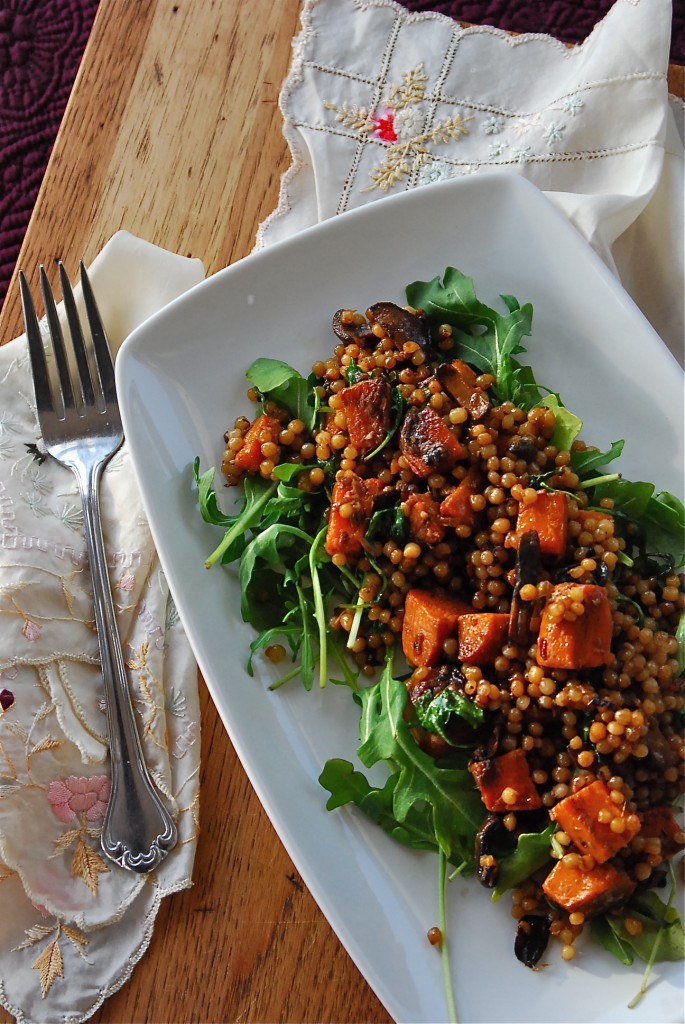
This recipe was bookmarked back in October, most likely. As is the norm, I’m just not sure why I don’t tackle these things as soon as they land in my radar. I could have been enjoying this dish on repeat each week, changing up the vegetables and inhaling it’s deeply dark and sweet flavor through these last few months, but as usual, it languished. And we missed out. That’s too bad. The flavor in this dish was incredible, invading our senses not only as it cooked, but as we gathered over our steaming bowls, forks poised in anticipation. I looked down at my bowl and turned to Mike. “This is a total restaurant dish.” and he nodded as the first bite crossed his lips. His eyes lit up and he smiled.
And there’s another reason why I kick myself for waiting so long to enjoy this. To miss out on seeing that is criminal.
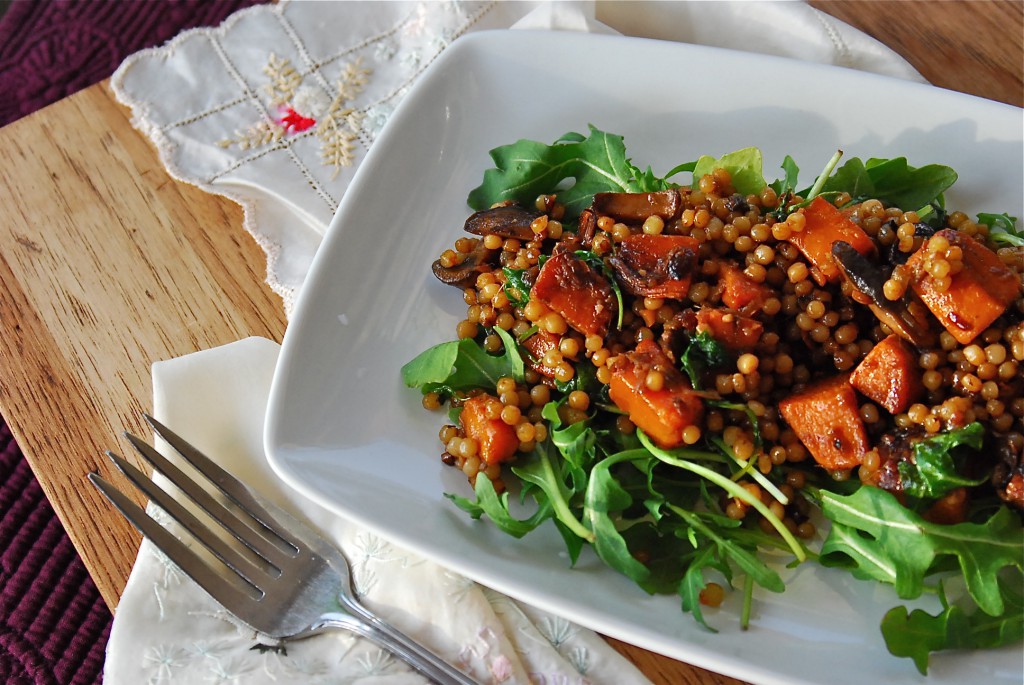
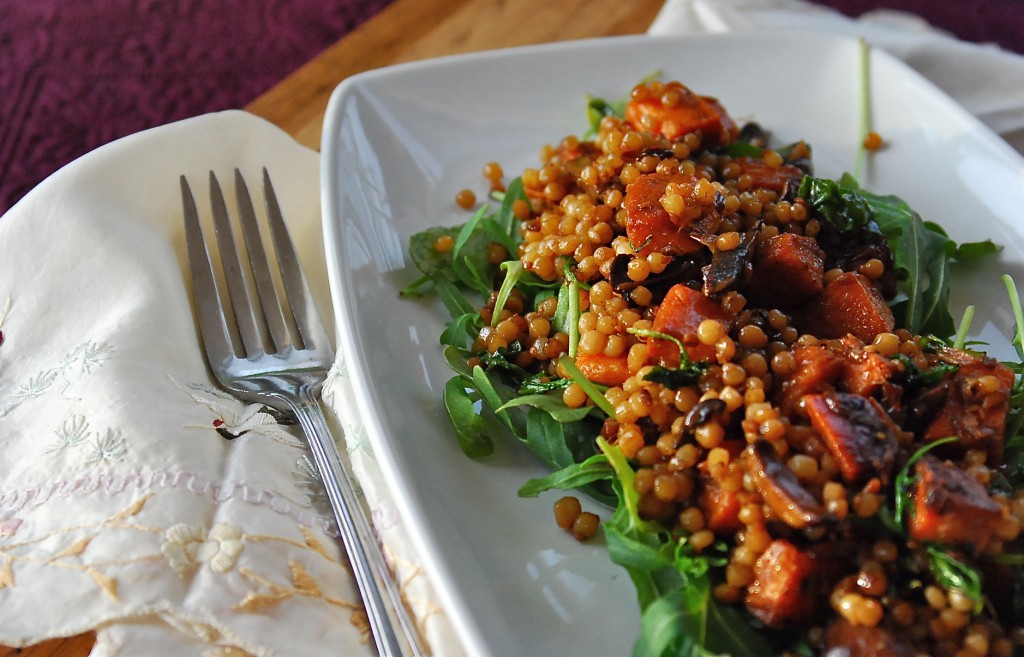
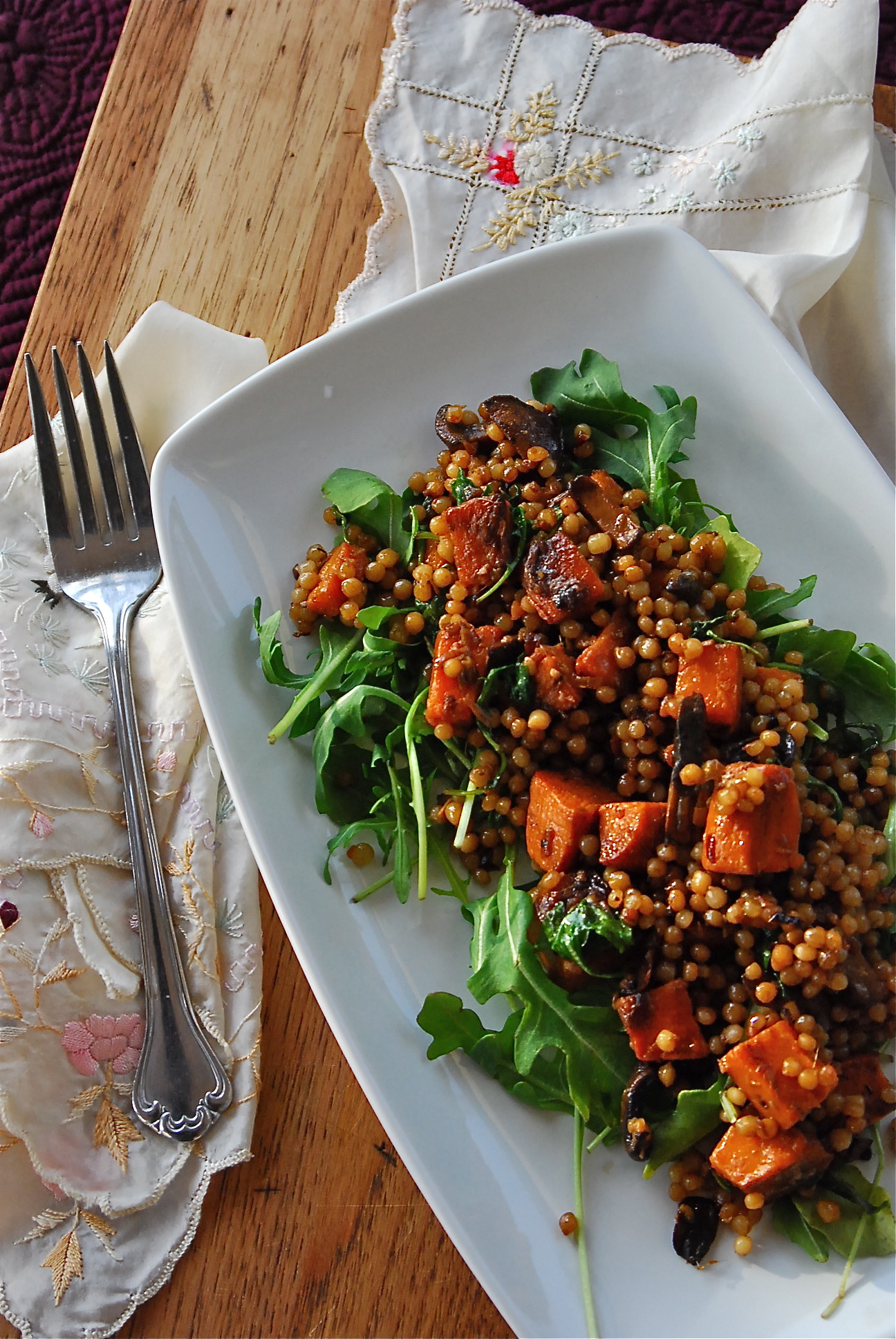
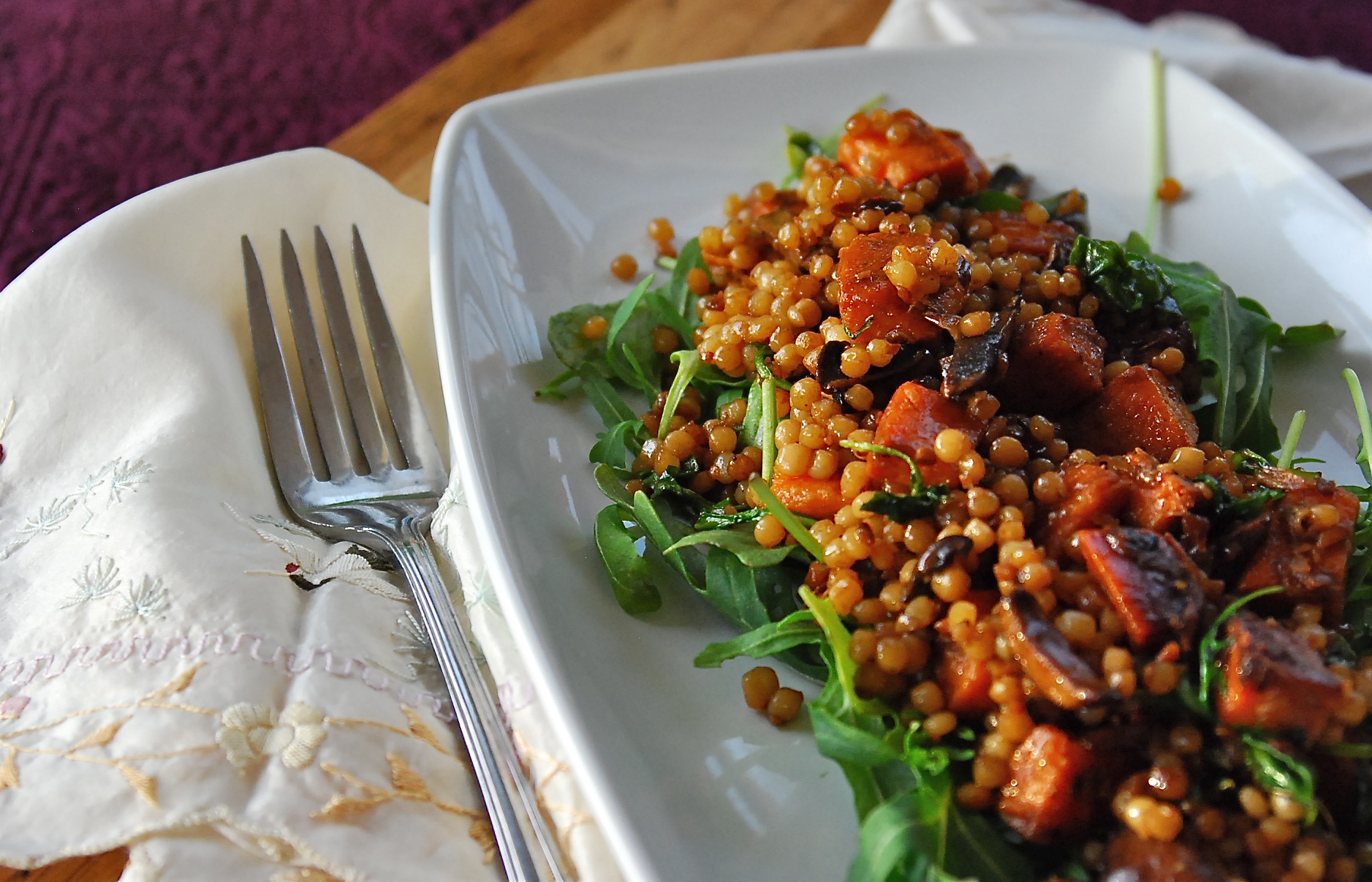
The creation of this dish isn’t difficult; it does require some attention as you methodically caramelize your vegetables in stages on the stovetop. I evolved the process from the original instructions to make it even easier for your average cook. You need a big pan with lots of surface area- I used a 12″ skillet with straight sides- and patience to allow the vegetables to cook, undisturbed, so they achieve that golden flavor and color. The original recipe calls for using orzo, but I’m slightly enamored of pearl couscous these days, so any excuse to throw that in the mix is fine with me. A good hearty brown rice would even work. While there are a lot of steps to this recipe, it flows very well so don’t let the length intimidate you.
Don’t you just love that color? Not only is the dish gorgeous all on it’s own, placing it in the morning sun, as it rose behind a thin band of clouds brought out all it’s burnished caramel-y tones. Even with it being 9:00am when I took these photos, I could have eaten this for breakfast without a second thought. Hmmmm….. don’t mind if I do.
Caramelized Vegetables with Pearl Couscous
Salt
2 c. pearl couscous
Grapeseed, peanut, or vegetable oil
1 large sweet potato (about 3/4 pound), peeled and diced, about 1/4″-1/2″
1 large onion (about 1 pound), finely diced
4 cloves garlic, minced
3-inch piece fresh ginger — peeled and chopped fine, about 1 tablespoon
1-8oz pkg portabella mushrooms, sliced, with stems removed
1 T. balsamic vinegar
2 T. soy sauce
3 big leaves chard or kale, stalks removed and leaves finely chopped — about 2 cups (I subbed in the equivalent of arugula)
Freshly ground black pepper
Parmesan, optional
Heat a large pot of water to boiling and salt it generously. Cook the couscous until barely al dente — about 5 minutes. Drain and toss with a generous drizzle of oil so that the grains are lightly coated with oil. Set aside.
Heat a large sauté or frying pan (the largest you have — you want plenty of room and hot surface) over high heat. Drizzle in a little grapeseed or vegetable oil (not olive oil — you want an oil with a high smoke point) and heat until very hot. Add the sweet potatoes and arrange them in one layer. Cook them over high heat until they are beginning to caramelize and turn brown — about 4 minutes. Flip them over and cook for another 3 minutes or so.
Turn the heat down to medium and add the onions, sprinkling them with about a teaspoon of salt. Cook, stirring occasionally, until the onions are beginning to turn brown. Add the minced garlic and chopped ginger and stir them into the onions. Push the sweet potato and onions to the edges of the pan, making room in the center.
Add the sliced portabella mushrooms to the hot center of the pan and cook them for 4 minutes without turning them. Then flip and stir them and cook for another 4 minutes. Once browned, stir them in to the sweet potato and onions. Keep the heat at medium, or slightly higher. Stir the vegetables occasionally. You want them richly browned.
At this point everything should be getting well-cooked; the onions should be quite dark brown and the garlic should be golden and soft. The potatoes should be softening.
Whisk together the vinegar, soy sauce, and 2 tablespoons of oil. Pour this into the pan with the vegetables and mix everything together, scraping the bottom as you go. Cook all the elements together for about 3 minutes on medium heat. Then turn the heat up to high, as high as it will go.
Add the couscous gradually, shaking in about a cup at a time, stirring and scraping constantly. Cook the couscous over high heat with the rest of the vegetables for about 5 minutes, letting the couscous get browned on the bottom of the pan, then scraping it up. You are developing a little more color and flavor on the pasta, and helping all the flavors combine. (I cooked this a bit longer to get more flavor in the couscous. The browning of it smells glorious)
Finally, toss the greens into the mix and cook for 1 more minute or until the greens are barely wilted. Turn off the heat and taste. Add salt and pepper if needed. Serve hot, with shavings of Parmesan if desired. (We didn’t even consider the parmesan. And I don’t think it even needed it.)
Original recipe from The Kitchn, by Faith Durand. Here with my own modifications.
January 3rd, 2012
| 2 Comments »
January is a good month for waffles. Just the word ‘January’ in the Midwest conjures images of bracing wind, snow whipped sidewalks, scarves and thick mittens. It’s the aftermath of December, a holiday-less month of Winter. Nothing but winter. It needs something to lighten it up a bit, to warm us against the long dark months ahead.
My most favorite Buttermilk Cornmeal Waffle was born in January, bringing it’s crunchy warmth to a bitterly cold sub-zero day, just about 2 years ago. I’ve relied on that waffle recipe without question, reaching for it time and again to stir myself to face Winter’s white bite, to fill me with the gumption to dress for a day that rattles the windows like an angry giant. Our December was so uncharacteristic for Minnesota; unseasonable warmth, no snow and mild temperatures. We celebrated Christmas without a trace of snowflakes, then came New Years Eve, and rain began to fall, quickly changing over to the fattest, wettest flakes I’ve seen in ages, and by the time the sun rose on 2012, it looked a bit more like January should, and it felt like it too. Waffles needed to bridge the gap between the past year, and the start of this one. But not just any old waffle.

That burnished beauty isn’t exactly showing off it’s best in the photo, but that plain looking waffle is hiding a rich, spicy secret; cardamom, cinnamon and nutmeg, mingling with tiny chunks of tender sweet potato. A bit of inspiration, and an urge to start off the New Year with more than just the same old waffle, I reached for a container of cooked squash, opened the spice cabinet and crossed my fingers. The scent rising from the steaming waffle iron was heady and enticing; the first bite, amazing. Tangy with buttermilk, hearty with wheat flour and altogether a knock-out way to start 2012, this will definitely be on ‘Repeat’ for the remainder of Winter, whether it chooses to snow like crazy as it did last year, or remain mercilessly un-winter-like, there is one thing for sure; bellies will need filling, and this is the key that slips perfectly in to place.
Spiced Sweet Potato Waffles
3/4 c. whole wheat flour
3/4 c. AP flour
2 t. baking powder
1 t. baking soda
1/2 t. salt
1 t. ground cardamom
1 t. ground cinnamon
1/2 t. ground nutmeg
1 T. sugar (or honey would work too)
1-1/2 c. buttermilk (I like to use vanilla soymilk, and add two tablespoon vanilla yogurt for tang)
2 eggs
1/3 c. neutral flavored oil, such as rapeseed or canola
1 c. cooked mashed sweet potato or other cooked squash
In a large bowl, whisk together the wheat flour, AP flour, powder, soda, salt, cardamom, cinnamon, nutmeg and sugar. If using honey, add that to the wet ingredients.
In a separate medium sized bowl, add the buttermilk, eggs, oil and squash. Whisk until smooth. Add to the dry ingredients and gently fold together using a rubber spatula. Be sure to scrape across the bottom of the bowl to mix thoroughly. Do not overmix the batter. Allow to rest for 15 minutes. You’ll see bubbles form on the batter. Don’t stir it anymore.
Bake waffles according to your individual waffle maker. Mine makes 8″ round waffles, and I used 1/3 c. batter per waffle. This recipe made 6-8 waffles.
The original recipe used for this batter comes from The Breakfast Book, by Marion Cunningham.
|