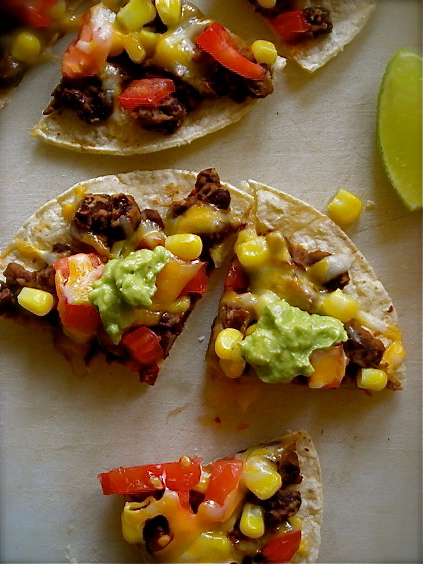
For a simple supper or easy appetizer, these crunchy tostadas are a snap to put together. And they have me craving Summer.
black bean & corn tostadasMarch 21st, 2013 | 2 Comments »
For a simple supper or easy appetizer, these crunchy tostadas are a snap to put together. And they have me craving Summer. cauliflower two waysJuly 5th, 2012 | 4 Comments »Cauliflower is so endlessly versatile, and to think up until a few years ago, I’d only eaten it raw or boiled. Boiled? Ugh. Steamed is a much better, albeit bland, option, but if you allow it to go too far in the steamer, it’s lack of inspiration becomes legendary. The epiphany, thankfully, was the pan of deeply roasted cauliflower that changed my mind about the stark white florets forever. I’ve tried it mashed like potatoes, and also pureed smooth with parmesan for a creamless alfredo sauce. But time and again, I placed a pan loaded with it in to a hot oven and devoured the results. That was about it for that vegetable, and I was fine with it. I could eat cauliflower year-round, and I do, but now with a few new methods in my arsenal, I can enjoy this vegetable a whole lot more.
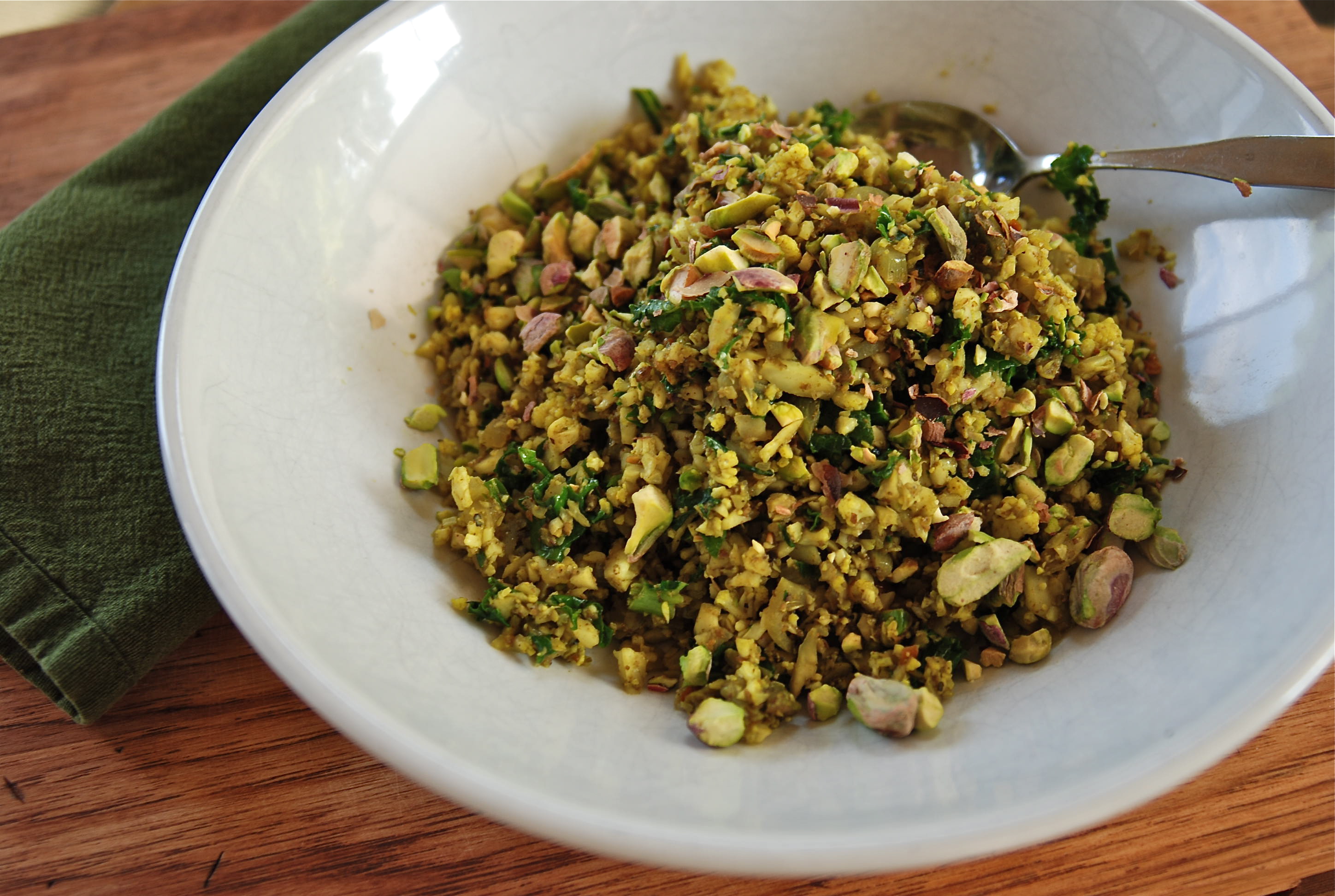
I came across this fried ‘rice’ recipe for Cauliflower on Shanna’s blog and knew that I had to get that going in my own kitchen. While I do love fried rice to the depths of my heart, it’s best when you have cold, cooked rice on hand and that’s not just something that materializes in this kitchen every day. But a head of cauliflower, ground in a few pulses in your food processor and mixed with the same type of seasonings in a hot wok can be a dynamite substitute, with a lot less calories and carbs. And simple doesn’t even do this justice. It’s ridiculous how easy and quick this is. I spent more time prying the leaves from the core of cauliflower than any other aspect of putting this together, including chopping an onion. Given that you’re basically pulverizing the vegetable, you can use the core of it as well and no one would ever know the difference. In less than 10 minutes after heating up my wok, we sat down to steaming bowls of this fragrant meal. Shanna has two options for this recipe on her blog, which is a wealth of beautiful writing (with a love story that’s almost as good as ours…..) and this base of ground cauliflower could really withstand just about any treatment to create your own version. I made a rich curry flavored dish, enhanced with ground pistachios for flavor and as I tossed and cooked it, inhaling the fragrance from the wok, I started thinking of all sorts of vegetables I could add to this to make it better and deeper in flavor, and in a second round of this simple meal, I added in some leftover vegetables from a coconut curry stir fry that Griffin had made, as well as a few handfuls of cold rice and the results were equally spectacular. This will be a new favorite in our house, you can bet on that. Another mind-blowing option for Cauliflower that I’d been thinking about lately is to prepare it on the grill. I’ve seen methods of doing this by slicing through the head, creating a ‘steak’ and laying that on the grill. In my attempt to cut my Cauliflower though, my ‘steaks’ broke apart, leaving me with no other choice but to toss them on my grill plate to cook. Probably one of my best purchases for outdoor cooking, my cast iron grill plate lays directly on top of the grate and is perfect for cooking all manner of small foods; I can grill peppers and onions for fajitas, asparagus without losing any stalks, mushrooms, small fruit and a wide range of other foods, and it was perfect to create this smoky, sensational grilled cauliflower. I could barely contain myself from eating the entire bowl of it. My most favorite marinade to use on grilled vegetables is a spicy mustard vinaigrette, brushed or tossed with the vegetable prior to being placed on the grate. It imparts terrific flavor, with just a bit of punch from the mustard. I’ve found that it works well on almost every vegetable I’ve ever grilled. Which, admittedly, has been A LOT. I love to grill just about anything.
RECIPE NOTES: This can be treated like any fried rice recipe, using vegetables to bulk up the finished product. The variations you can make are positively endless. the pastabilities are endless ( and a giveaway )June 28th, 2012 | 21 Comments »In moving past the continual consumption of meat with our meals, it brings to light an entirely new way of going out to eat, as I’m left wondering how up to date any restaurant will be with their meatless options. There are those places that soar, offering a wealth of meat-free entrees that dazzle, while others places rely on pasta dishes as their sole vegetarian fare. Pasta isn’t bad, mind you. I do enjoy it. But these days, having just a pasta dish or two with vegetables as your meatless menu offering is pretty unimaginative for a restaurant. But that being said, pasta has it’s virtues.
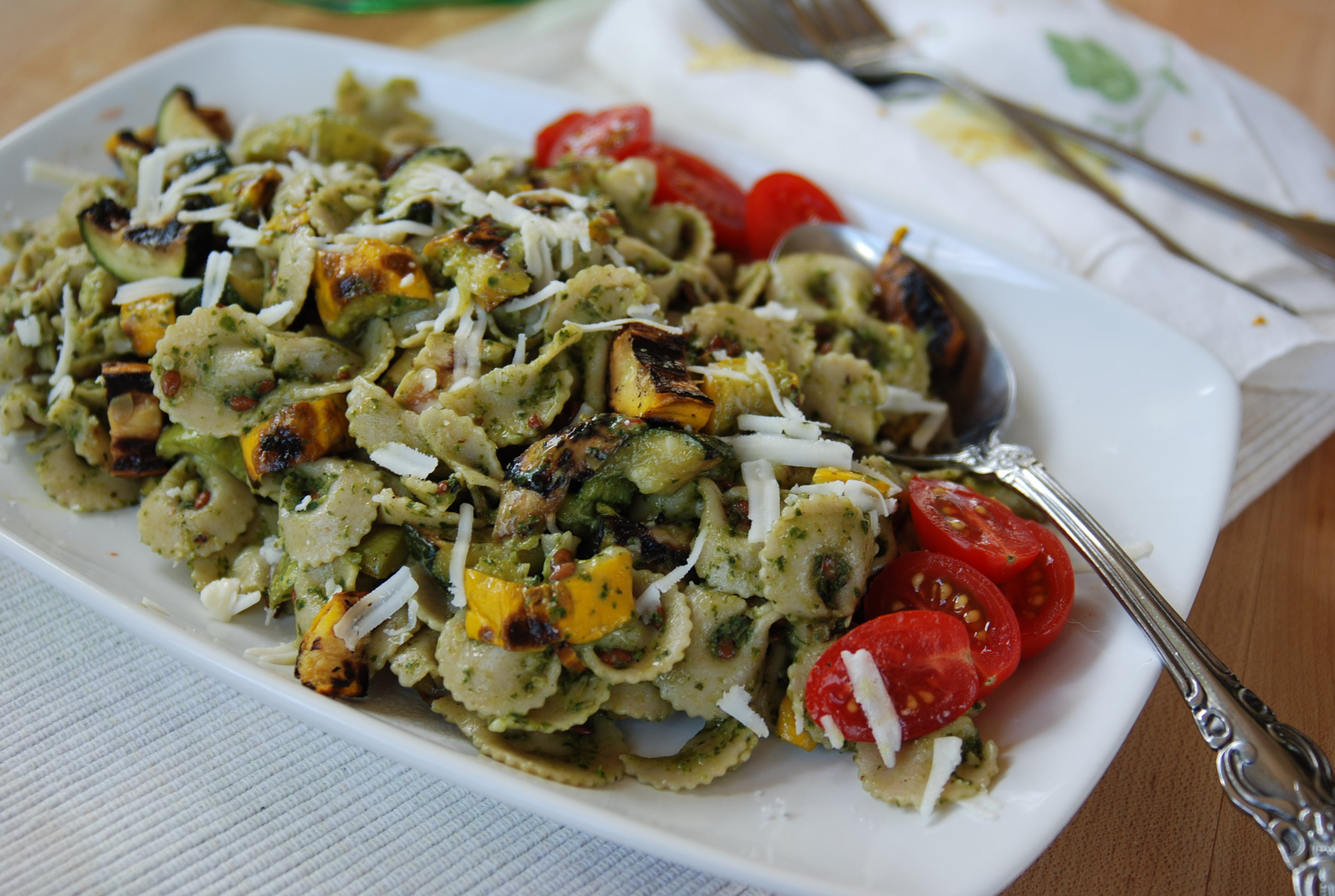
Hodgson Mills Pasta is running a recipe contest on Pinterest and I’m participating with this recipe. Are you on Pinterest? There’s a special page for Hodgson Mills that has all the recipe entries on it. I’d appreciate a vote if you’re so inclined. There are some pretty nice prizes. You must go to the page linked above to vote. Pinning this recipe from my blog won’t count. And Hodgson Mills was nice enough to offer $25 dollars of assorted pasta to one lucky winner from my blog. That’s a lot of pasta! All you need to do to enter is leave a comment on my blog stating your favorite way to prepare pasta (US residents only, with a valid mailing address, please) You have until Thursday July 5th to leave a comment and be entered for the giveaway. I will choose one commenter through Random.Org and contact you via email, so be sure to leave that information. Hodgson Mills will ship directly to you. Do you love your pasta rich and cheesy? How about chock full of rich tomato sauce and italian sausage? Plain with simple garlic and olive oil? I’ve been enjoying Hodgson Mills whole wheat pasta with summer fresh pesto and grilled vegetables, and creating this recipe was a deliciously fun way to use up a huge box of basil that I’d been given. Food gifts are the best, aren’t they?
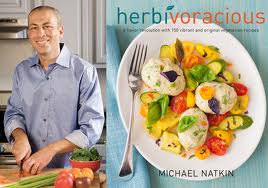
herbivoracious- review & recipeJune 19th, 2012 | 5 Comments »I’ve been on a mostly plant-based eating plan for just over a year now and have no intention of ever going back to eating meat on a regular basis. I’m not against having a bit of it here and there if the mood suits me, but with a heightened awareness of how it deeply affected my health, I’m off of the stuff for the long term. Trouble is, I’ve been searching for cooking inspiration and while I can find a great deal online in the blogs that I follow, I hadn’t come across a really good source until I serendipitously found Michael Natkin’s blog, Herbivoracious, and within a day’s time was invited to a local book signing with the author. Everyone who attended the event received a complimentary cookbook and several tantalizing bites from the simple and gorgeous recipes in the book.
I haven’t devoured a cookbook like this in a very long time. I’ve purchased a few promising vegetarian cookbooks through used book stores, but have come away from them feeling uninspired, or worse, dismayed at the boring recipes. In our current state of food, with a wealth of ingredients available to us, fresh produce everywhere and home cooks hitting up the internet with abandon to share their stories and recipes, we shouldn’t feel like pasta and vegetables make up the bulk of a vegetarians meals, but that was the message a lot of vegetarian cookbooks still seem to send. I wanted something that reflected the modern cuisine, full of a wide selection of fresh ingredients, unique spices, terrific grains and a grown-up mentality towards consumption of plant-based foods. Just a few pages in to Michael’s book and I knew I’d found what I was looking for, breathing an excited sigh of relief. I immediately started marking pages, rich with inspiration, my mouth already watering over what was to come. One aspect of this book that I love is that it mirrors my own cooking philosophy, in that a recipe should be a guide, and not a cut and dried interpretation of the finished dish. Michael clearly discusses ways to change up his recipes, suggesting additional ingredients or substitutions and encouraging the reader to utilize what’s on hand. Every dish is simple, yet elegant, running the whole range of time needed for completing the recipes from about 10 minutes to pull together an easy salad to longer, in-depth recipes for those special occasions. The book is full of advice on sourcing ingredients, caring for your knives, planning your meals and making your prep easier to manage; he covers so many little details that it makes the book more than just a cookbook, but something akin to treasured kitchen advice. The cover page is gorgeous, but if it gets torn, stained or otherwise in your exploration, the actual cover itself still has it’s beautiful logo. I like that in a book. Even while still at the book signing event, chatting excitedly with a few friends and paging through the book, I came across the Golden Beet Tartare recipe and knew that would be tops on my list. I adore gold beets and it sounded like a delicious summery salad for a hot, sticky day. I wasn’t wrong at all about that. The heat is on, Minnesota. It’s time to stay cool, right?
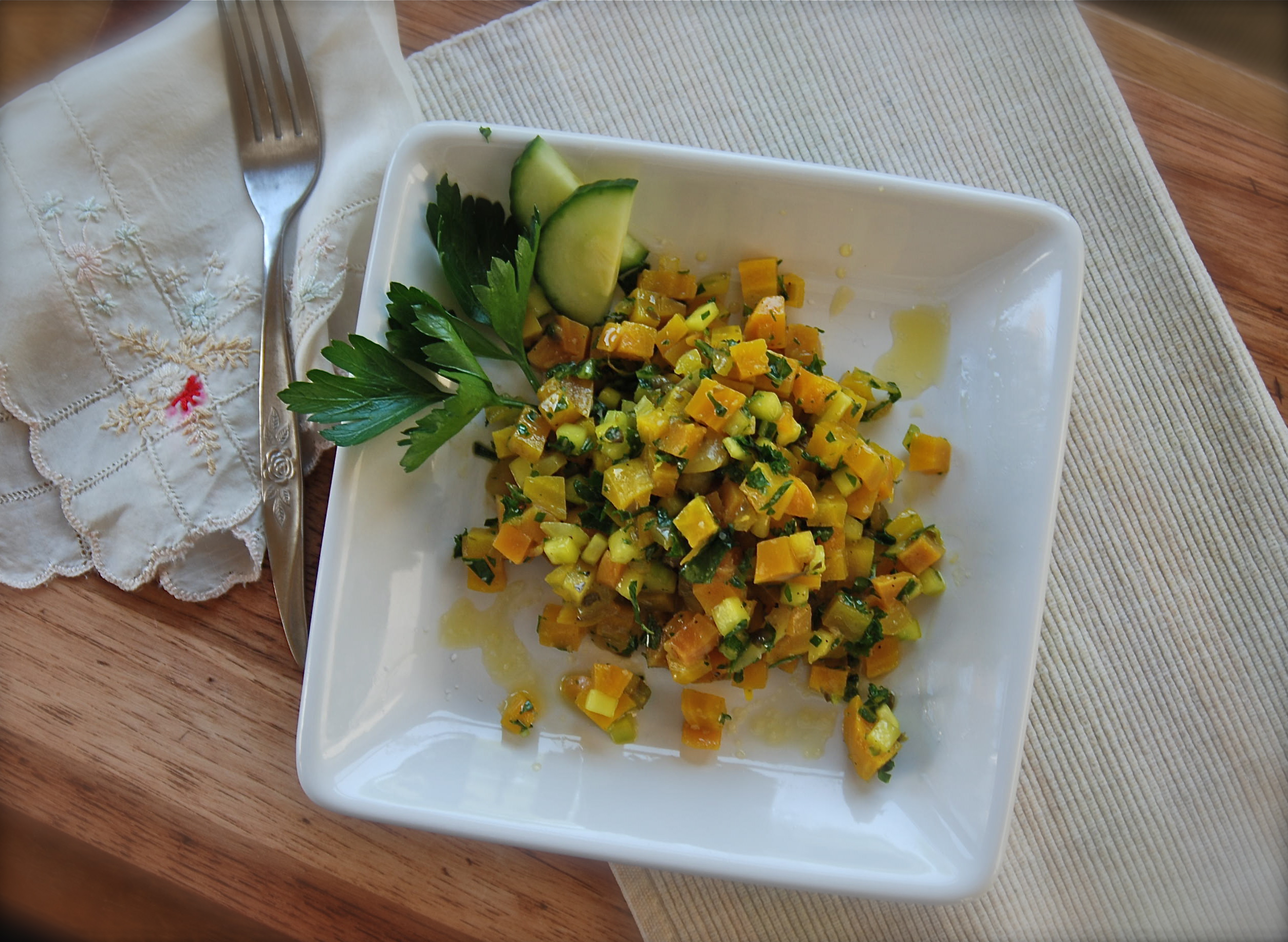
Fresh and bright, this simple salad has crunch and texture galore, the rich earthy taste of beets and mellow cucumber and onion. The original recipe called for raw red onion which I don’t ever use as I dislike raw allium in anything, so I substituted grilled vidalia onions with just enough snap remaining. Once it was all pulled together I thought it still needed a bit more color to jazz up the visual aspect, so I finely chopped some kale leaves that gave it the perfect balance.
I can foresee this recipe becoming a regular in my kitchen, giving it repeated appearances and endangering my endless love of beets. With the upcoming beet season looming, and such pretty colors and patterns in this nutritious and healthy root vegetable, I vow to practice enough restraint to keep it fresh and desirable so we can continue to enjoy it’s benefits. Right now, I’m fighting off the urge to consume the entire container of this salad. A definite winner. Please visit Michael’s site, for his complete recipe for Golden Beet Tartare. I’m going to give you my method, which, as Michael encourages, is my own take on the recipe.
DISCLAIMER: I received a complimentary copy of Herbivoracious from attending the book signing event. All opinions and feedback about the book are strictly my own.
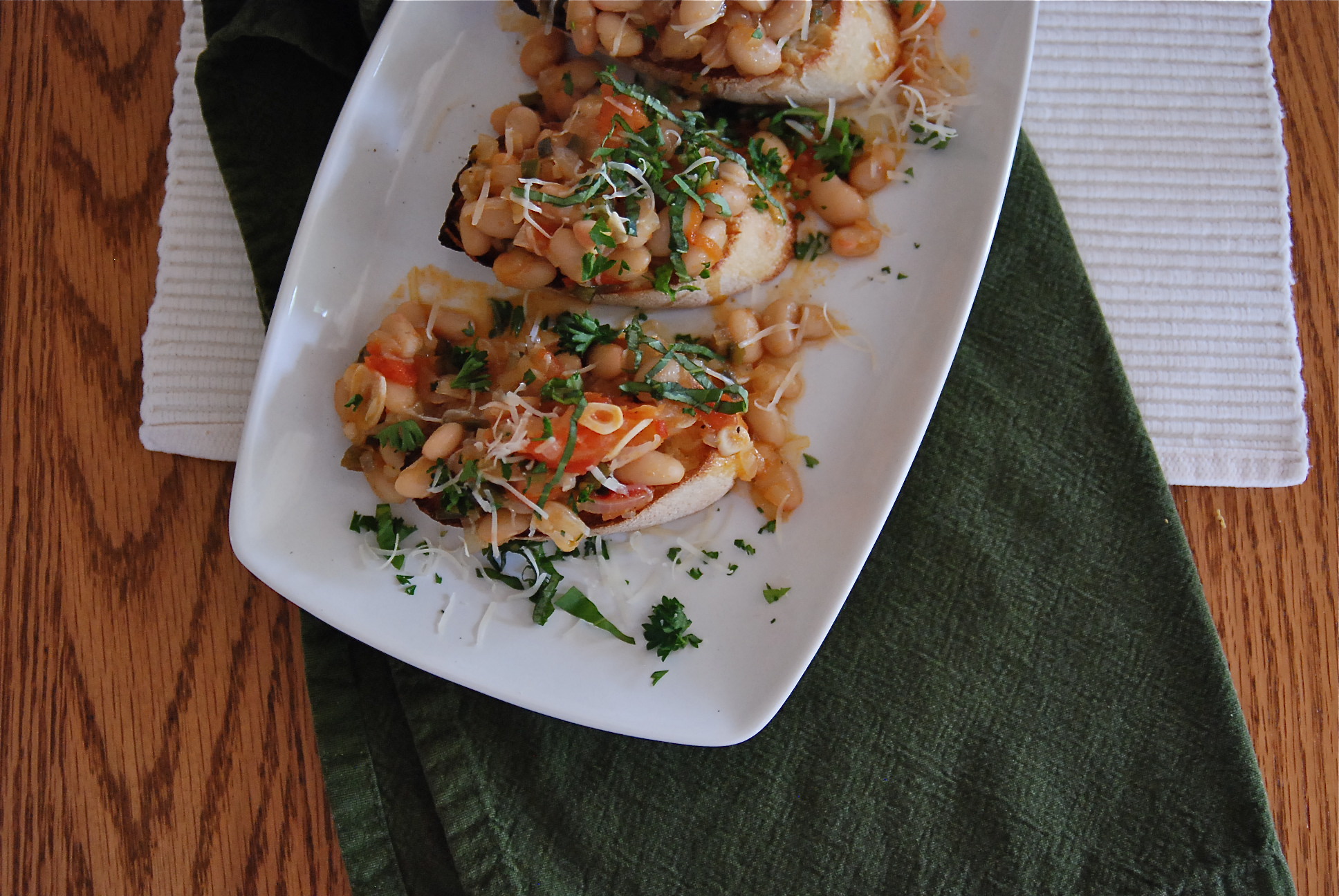
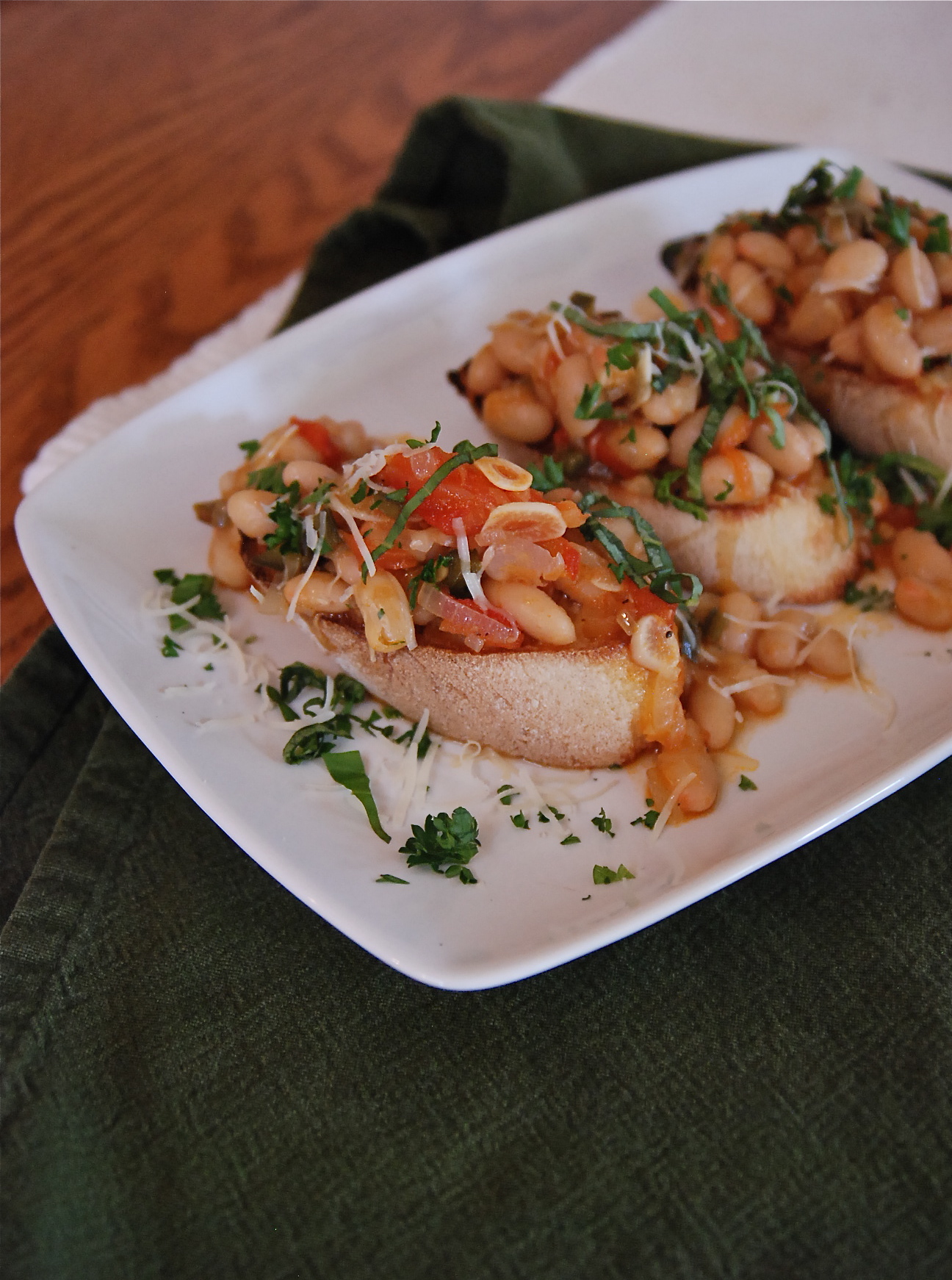
white bean ragoutMay 23rd, 2012 | 1 Comment »I’ve been phenomenally absorbed by Tamar Adler’s An Everlasting Meal. I’ve barely even gotten through half of it because I read, re-read, underline, contemplate, read AGAIN and then think about it like my very life depends on those words filling every pore in my body. Have you read it? If you love food, and you love simple, easy, good food, I strongly encourage you to pick it up, but be warned….. this book could change the way you cook and I urge you to own it so you can really enjoy the prose, the story, the thoughtful way that Tamar looks at the very things that sustain us. I’m grateful to this book too, as it came to me through a renewed relationship with an old friend from high school. Connecting on Facebook, even though she lives in Brussels, Belgium, we’ve exchanged many emails about food, and her quest for some information on what constitutes ‘good’ olive oil led to a long discussion about this book. A few days later, the book itself arrived on my doorstep, courtesy of this friendship, and now I know why Barbara was so moved by it. Tamar’s philosophy about food is utterly simple. It doesn’t have to be complex in the least, and she states this over and over again, through every chapter, rich with descriptives of meals so ridiculously simple that it honestly could inspire even the most timid home cook to become brazen in their own kitchen. The chapter on beans gave me more to think about regarding the humble legume than I’d ever imagined, and was the inspiration when along came a day where a simmering pot of beans just seemed like the thing to do.
Simple and fulfilling meals have always been my most favorite. I don’t mind fancy eating, once in a great while, but my start on food was a humble beginning, and I’ve lived through some seasons where there just wasn’t enough on the table. I’m not particular about my food, either. I’ll eat most anything I’m served and I’m grateful for it, as the memories of hunger will always remain within me. To me, a pot of beans is a thing of beauty; savory without a lot of work, filling without heft, satisfying like an old friend. It’s soul {filling} food, that which makes you just feel good. Although I do enjoy the long process, on occasion, that a dried bean requires for preparation, I keep on hand a wide variety of canned beans, and in a pinch, these have saved dinner, lunch and even breakfast from mediocrity. A good time simmering and they become so creamy soft and perfect. With a loaf of chewy bread, it’s royalty on a plate, by way of a peasant’s wage.
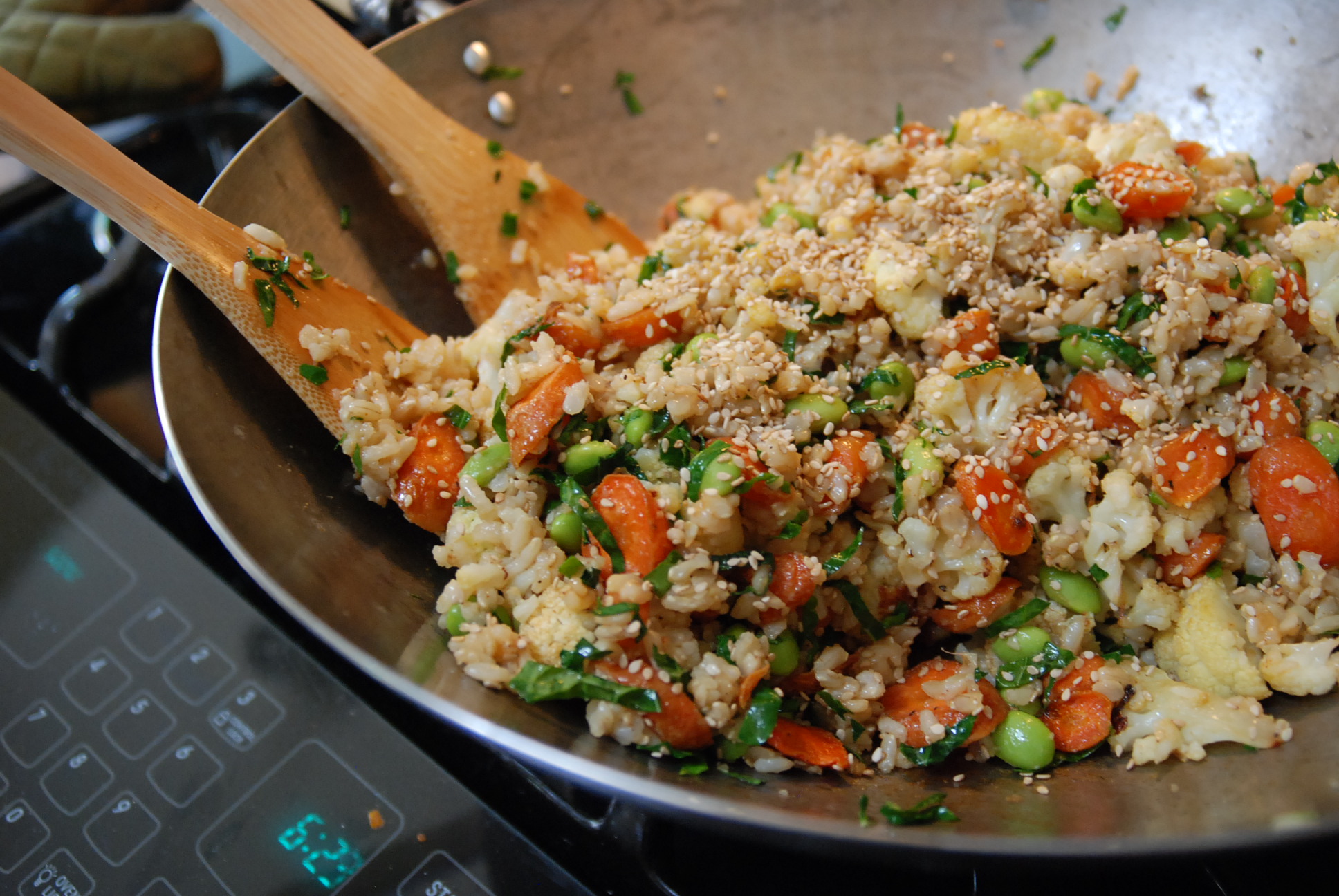
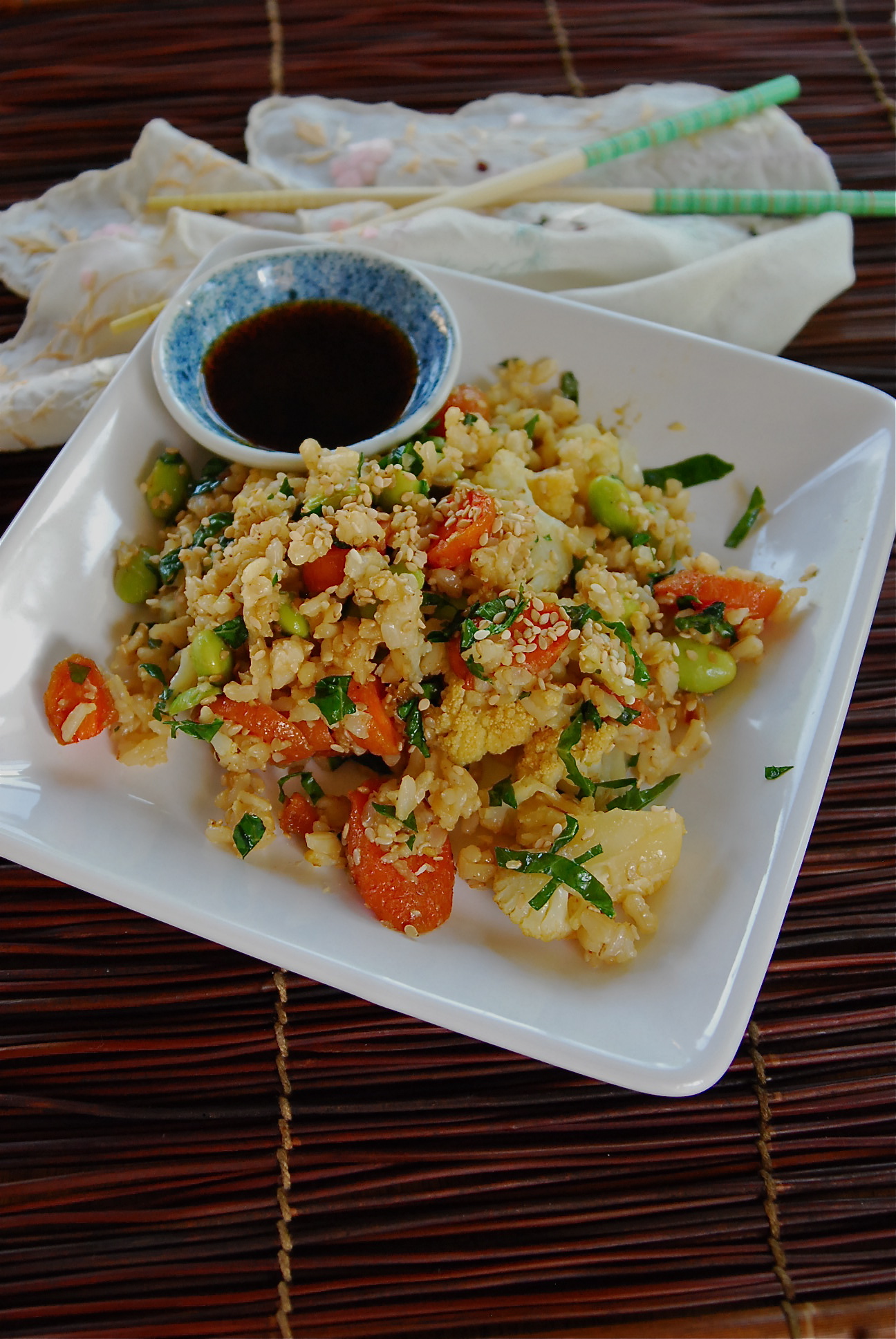
unconventional fried riceMay 21st, 2012 | 2 Comments »A really good bowl of perfect fried rice is one of my most favorite things to consume. Any restaurant with it on the menu sets it’s yardstick by how good their fried rice tastes, and with one bite I’m either over the moon or sadly disappointed. A matchless bowl will have the ultimate combination of firm grains of rice, a deep rich flavor from the wok and enough extras to make good flavor without sacrificing the overall taste of the dish. I’ve made fried rice at home on occasion, and always with the caveat that my wok will never replicate that of a good restaurant. I enjoy it for what it is from my own kitchen and don’t expect perfection. Especially if I stray from a standard method and go off on my own path. I’m like that as a cook, anyway. I’m not one to follow a crowd and stick to something tried and true. I like to push myself with my food and try many different means to fill my belly. My unconventional means to a steaming bowl of fried rice started with roasting a few pans of vegetables and ended up with a decent rendition for dinner that everyone enjoyed.
The best beginning to any fried rice is always cold, cooked rice. A few cups of that, along with any variety of vegetables and a hot pan and you’ve got what you need. My version had edamame, roasted cauliflower and carrots in it, plus the remains of some shredded lacinato kale that I had on hand. True proponents of fried rice likely would shake their heads at this combination, but that’s me, in a nutshell. Improvising is my strongest tool when it comes to cooking. There are many days that I stand, pantry doors open, fridge ajar, my mind churning with possibilities, and learning to utilize what’s on hand is a skill worthy of any home cook. Plus? This was utterly delicious.
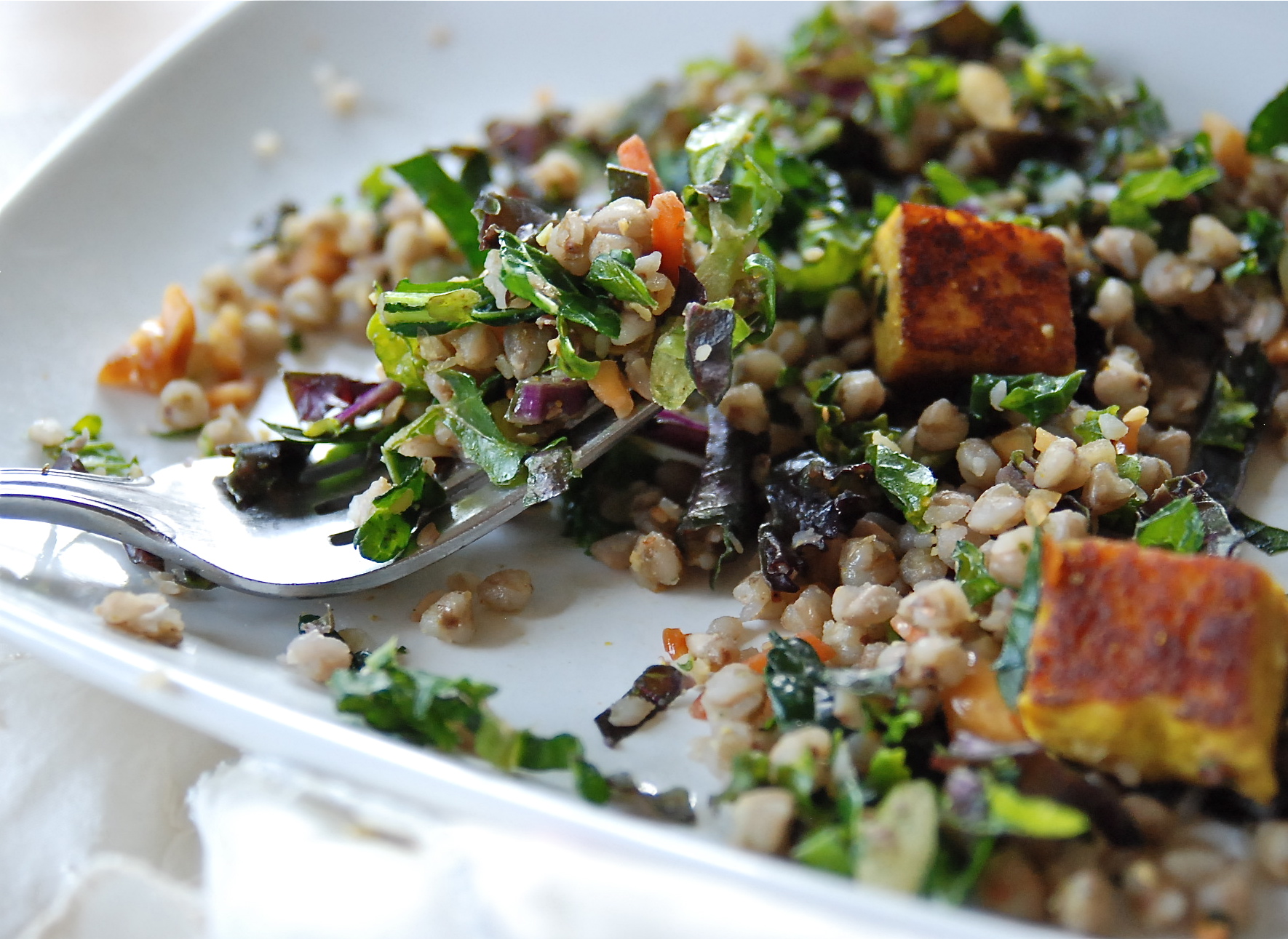
on second chances (and a giveaway)May 10th, 2012 | 16 Comments »There are plenty of food items, when given a second chance (ok, and sometimes a third or fourth) will reveal much more to your palate than they did on the initial try. Every time I hear of someone disliking a specific food, I ask them how many times they’ve eaten it, how it was prepared or where they had it or any number of questions to determine what they don’t like about it. I always want to know the whys and hows and whats of someone’s intense aversion to a certain food. When I first met Mike, he told me he did not like salmon. Not one bit. When pressed for more information, he revealed that when he’d eaten it, it was tough in texture (definitely overcooked) and tasted fishy (definitely not very fresh) and so I made him a salmon dinner one night of a terrific piece of fresh salmon that was perfectly cooked. I hooked him for life, pun intended. A poorly prepared food item can be a real turn off. For the longest time as a kid, I absolutely hated pork due to it being overcooked and tough as nails. Once I tasted the beauty of perfectly cooked pork, tender and succulent, I was reformed. A lot of times, if it isn’t the way it’s cooked then it’s the texture. This was true of my tastes for a very long time. And almost all of the foods that I once disliked as a child, and even in to adulthood have now made themselves a permanent space in my life. Foods such as tomato, onion, squash of all kinds, eggplant, mushrooms…. this list is all about texture. And my initial introduction to Buckwheat groats, also known as Kasha, turned me off due to the texture as well. But the second glance, with a better cooking method in hand and some quick innovation in the kitchen, I turned this healthy grain into a mind-blowing salad that I can’t wait to make again.
As a singular food item, I’m still not enthralled with kasha, but I think that alone, this grain is pretty uninspiring. That all changes when mixed together with others, kind of like that quiet and unassuming person who comes alive in the right crowd. Kasha grains are tiny, heart-shaped and solid, similar to barley grains, with a sweet, nutty flavor and a nice chewy texture. Buckwheat groats are a potent nutritional item, with no cholesterol, sodium or saturated fat. It’s high in fiber and magnesium, with a low glycemic index. Mixed with shredded kale, dressed lightly in a simple oil & vinegar dressing and dusted with sea salt and cracked pepper, the grains added a perfect complement to kale’s crunchy personality. Chunks of tofu, seared crisp after a curry bath marinade, made for eye-catching color and a protein boost.
I was a little concerned that this salad would be a bit light, lacking the substance needed to fuel a body’s needs through the day, or evening, but after consuming a small plate of it, I was surprisingly full, and that satiation lasted until bedtime, and beyond. A small portion for lunch the next day easily carried me through the remainder of work too. And speaking of second chances……
And now, how about that recipe??
honey-soy glazed vegetables with crispy mushroomsMay 5th, 2012 | 2 Comments »
Saturday mornings are my sacred time. I rise early, with eager cats who think that the moment the birds start singing is ripe for raising their own voices, stirring the humans awake. I try to ignore Eli’s little ‘meeps’ while he negotiates the bed as light barely filters through the blind, but I can’t ignore his 16-lb frame when he steps on my head. It’s fine when all this happens around 7am in January. In May, at the prime hour of 5am, it’s a different story. But it’s his job and we respect that. Thank goodness for coffee. And Saturday is my time. Mike rises six days a week with those critters (God bless that man) but on Saturday, he sleeps like a teenager, often until the unlikely hour of 9 or 10. It’s good for him, and those quiet moments of early sunrise, with coffee and a purring cat, are moments that are good for me. The patio door is open (though not in January) the birds sing-song chorus is cheerful, the coffee is super strong just as I like it and I have oceans of time to scan my blog reader, catch up on email or even a show on Hulu if I want. I’m often selfish with time; I like some that’s all mine, that I don’t need to share with anyone. I like being introspective, quiet and alone sometimes and these Saturday mornings are perfect for that. I almost didn’t want to post this recipe. It was an utter ‘Hail Mary’ moment, a substitution of this for that, swapping one method for another and done in a haste that I’m almost embarrassed about. I had a small bag of fresh shiitake mushrooms, a plan and a time frame and every bit of it slipped away in the chaotic way that life takes charge and suddenly I was faced with a ‘Now or never’ option before the mushrooms became a slippery mass in their bag, and I punted blind. The first bite to my mouth was almost interrupted by my heart pounding so badly that it nearly cut off my ability to swallow. I set some pretty high standards for myself, and no one is really holding that yardstick up to me, but me. I think I know what I’m doing; I think I can look at a recipe and recreate it in my head to be more about what I like to eat. And almost all of the time, when I head blind in to a dish, swapped out of someone else’s work, I do really well with it. It’s when I don’t trust my gut instincts and follow a recipe step by step, with all the ingredients in line like regimented soldiers that I trip up over my own indecision and end up tossing the whole thing on the compost heap. Why do we sell ourselves short? We all do it, for one area of our lives or another. We can talk ourselves out of anything, refute the praise sent our way, shake our heads and frown at a compliment, and in our heads we make it seem so completely right, as in ‘Everyone does it and I’m not that great’. But here’s the thing: we ARE that great. We deserve those compliments and when they come, when praise rains down we shouldn’t turn from it, we should bask in it. It doesn’t mean we’re egotistical. It means something much more than that. At my age I should think I know who I am, what I am capable of, what I enjoy eating and what I really don’t like any longer, and I SHOULD be able to rearrange a recipe without hand-wringing and self-doubt. I’m good at my craft; God gave me a gift and a skill set, and every time I stop my forward momentum and start scratching at my chin, all wrapped up in anxiety as I second guess myself, I’m portraying to Him that I don’t trust Him one bit. Ephesians 2:10“For we are God’s workmanship, created in Christ Jesus to do good works, which God prepared in advance for us to do” {{I’m not here to ask, or even expect that you share my beliefs, and if you don’t, This very act of disavowing God’s gifts to us was discussed in a sermon in my church several months back and it sank in to my heart like a stone and settled there, and now, with conviction, every time I raise my own voice against myself, I hear His coming back to me. This is my gift, and this is HIS gift to me and I trust in Him with all my heart. It goes without saying that He is not one to retract a gift due to some misaligned belief. “Oh whoops, sorry. Those skills were meant for someone ELSE. NOT you!” He just doesn’t work in that manner. I can trust in my gifts as I trust in Him. And whether you believe or not, your specific type of faith is irrelevant. We all have amazing gifts that we can be proud of, that we can own 100% regardless of where we feel they come from. Acknowledging them is a truth that we should never deny ourselves. We don’t need belief in God for that to happen; just faith in ourselves. And with this recipe, in my rushed state to prepare this, without a whole great plan of exactly HOW it was going to be done, like I said, I punted blind and should have just told that quickened heartbeat to ‘Shush!’ as I raised my fork. I know that I’m good enough at my craft to make this dish amazing. Because the end result was delicious, and it was exactly like I expected it to be. And those crispy Shiitake mushrooms? What an amazing taste and crunch. I should prepare them that way just as a snack, drenched and dredged and seared to a golden crackle. I had to shoot the photos, taste the finished product and just as quickly as all that was completed, pack it away and race out the door to one of those life moments that you simply can’t miss. So I need to make this again, with time to savor and enjoy the process, the gift and the fruits of the Earth and rejoice in what I’ve been given. Do you ever find that you second guess yourself, or you dismiss praise, or shake off a compliment??What do you feel are your own unique gifts??
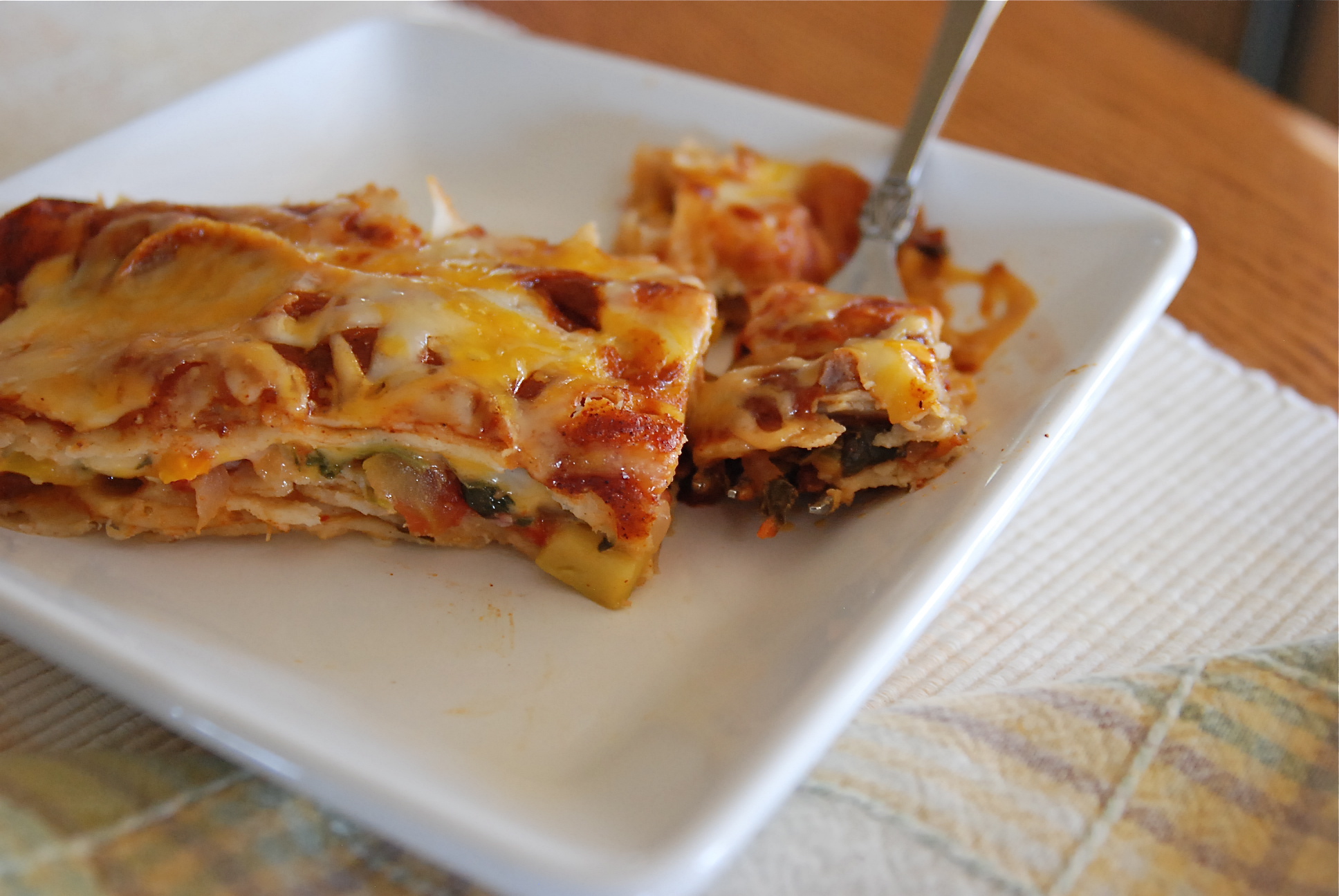
KATE’S NOTES: old reliable vegetable enchiladasApril 11th, 2012 | 1 Comment »There’s nothing, really, to making a pan of enchiladas. Tortillas, filling, sauce and cheese, a bit of time in a hot oven and you’ve got a dinner that should please just about anyone. I probably don’t even need to give you a recipe, do I? (but I will…..) What enchiladas are though, is reliable. At least in my home they are. I know they’re something that all of us will eat without a shred of complaining. And we all need those types of meals in our homes, on our tables and in our back pockets, don’t we? The ones that no one whines over, or rolls their eyes. A meal that everyone will gobble down with reckless abandon. I know with a few peppers, canned beans, frozen corn, a pack of tortillas and a bit of time, that a meal will land in our midst and pull us together, drawing the day to a close. And long before we stopped eating meat, I could make Vegetable Enchiladas and Griffin wouldn’t care one whit about them. Thankfully, that’s still true. We’ve slipped back to somewhat more normal weather these days, now that April has come and set her softly budding Spring on us. March’s heat wave gave us all a taste of warmth and summer and we all want it back, but these days, the nights come cold and brisk and for me, this past week of frost warnings and cold sunshine was enough to want the oven humming and a warming dish in our bellies. I know soon enough that it won’t feel like these comforting dishes will be necessary, so along with our old reliable Enchiladas, I wanted to have one last send off of a favorite meal before the heat comes and dinner plates are full of fresh and lighter meals.
There’s really two ways you can make Enchiladas, outside of choosing between corn and flour tortillas; you can roll up the filling inside the tortillas, or you can layer the filling between the tortillas, creating a more ‘lasagna’ style dish that’s equally as good, and sometimes a bit easier to negotiate out of the pan. I like them both ways, and the ‘lasagna’ method is a bit less work, but if you’ve got willing hands to help, the rolling part happens pretty fast. The best part of this meal is having LOTS of good leftovers, and I think the flavor gets much better overnight. And as for sauces….. I’ve never made an enchilada sauce from scratch that even came close to tasting like a few canned varieties I’ve found. My go-to brand of enchilada sauce is Carlita; it’s a deep, rich red sauce that’s got just the right amount of seasoning and spice. Las Palmas is another good option; they’ve got both red and green enchilada sauce, and have a Mild, Medium or Hot option. The Medium is plenty for us, and their green enchilada sauce is really amazing. (disclaimer: nobody paid me to say that, or gave me free products to say that. Just so you know)
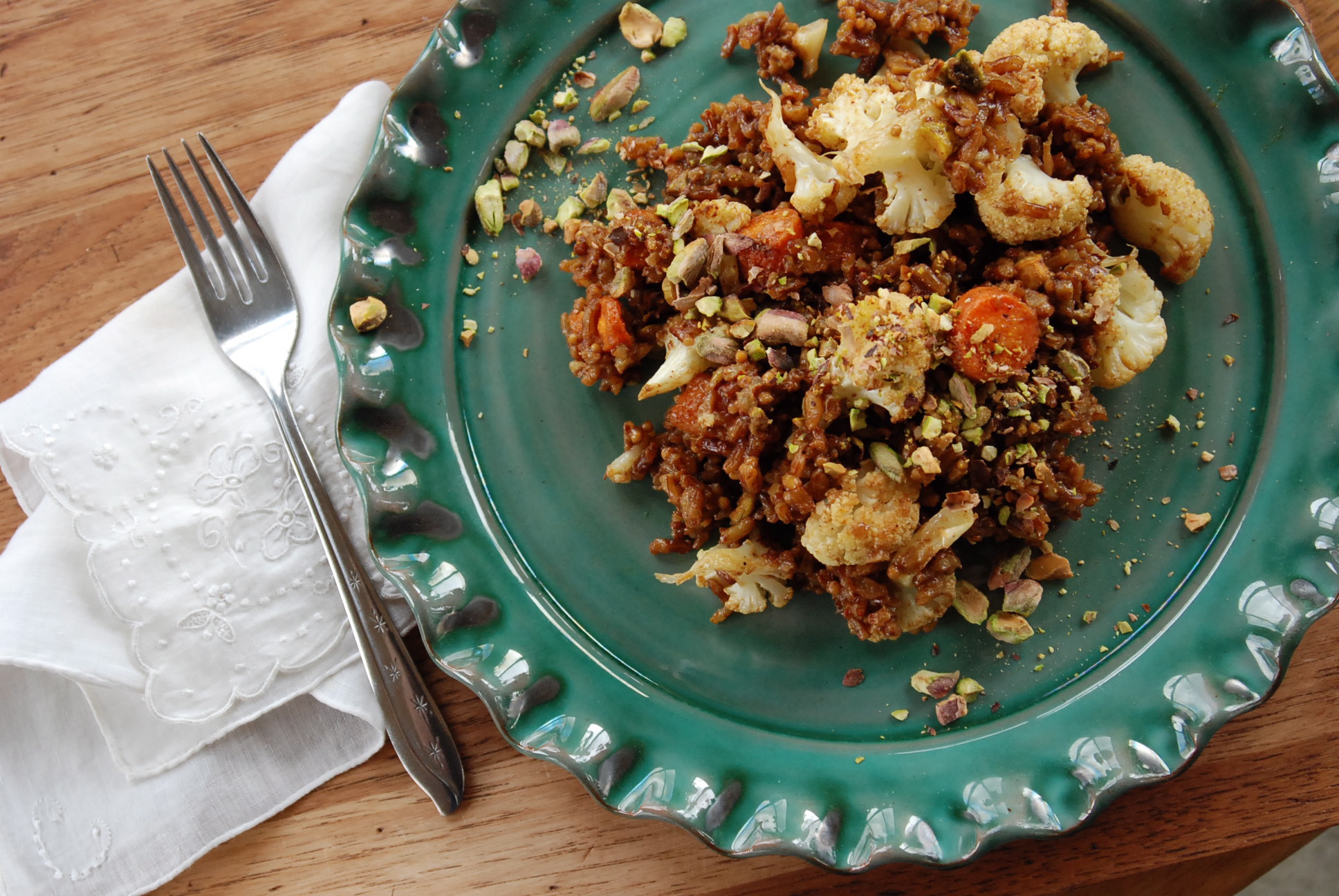
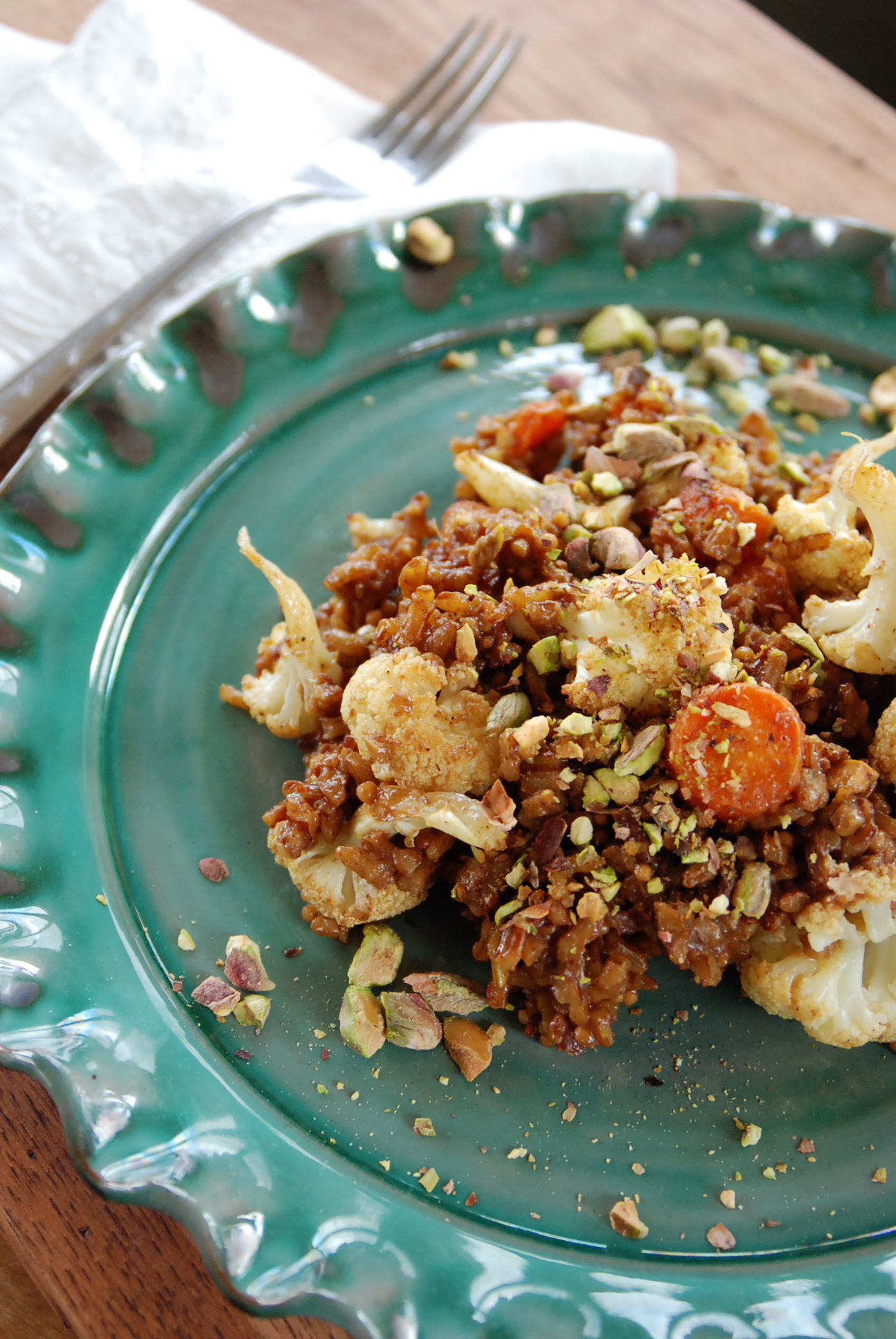
KATE’S NOTES: To make Enchiladas ‘Lasagna’ style, lay the tortillas on the bottom of the baking pan. Spread some filling over them, then top with a bit of cheese and a drizzle of sauce. Layer more tortillas and repeat. You should be able to get at least three layers, finishing with sauce over the top, and cheese before baking. Allow this to also sit for a spell before cutting in to squares. If you wish to add meat to the filling, please do so. I used to make these all the time with chicken, and once in a while with pork or beef. One pack of boneless skinless chicken breasts is perfect; dice them, and sear the meat in with the onions, then proceed with the remaining steps. Any leftover filling is wonderful for breakfast. I had about 1-1/2 cups left from this meal, and for breakfast I heated it in a pan then cracked two eggs in it, covered the pan and cooked it for about five minutes. I scooped it on to a plate that had a handful of tortilla chips on it. It was the finest breakfast I’ve had in a long time. red rice pulao with roasted vegetablesMarch 31st, 2012 | 3 Comments »When I was 15 or 16, my Mom broke her left elbow roller skating. Outside of the fact that my MOM -gasp!- was roller skating (and apparently getting rather cocky about it) she happened to be left-handed, and in breaking her elbow, this rendered her incapable of doing much of anything. She lamented one day, as I helped her in the kitchen, “I wish I had learned to use my right arm more.” and somehow this struck a chord with me, as did her inability to manage even the most mundane of daily tasks. It’s been in the back of my mind since then to train my hands to work equally. Although my left handed writing looks like an overly caffeinated six year old, and my knife skills in my left hand are nothing compared to my right, I can whisk, scoop, stir, twist, grind, mix and pour from either right or left. I can reach and function and do just about anything needed during the course of my day without having to switch gears, hands or mindset. There is always more that your body can do, when allowed. If you’ve learned how to type on a standard keyboard, then you can teach your non-dominant hand to do any number of things. Even though one side of our brain dominates, and we develop a set of skills with that dominant hand, there is far more that one is capable of if you’re willing to put your mind to it. That goes for recipe usage too. Recipes are not cut in stone; they should serve as a guideline, a base from which we can expand exponentially in many different directions. I love recipes because someone else has already done most of the work for me, but I am free to remove this and substitute that, increase this or decrease that or look at how it comes out in one form and think “I know this can be better.” and then trust that my skills can take me there. These skills have been especially useful in the re-development of this incredible Red Rice Pulao.
The origin of this recipe comes from Robin Asbell‘s New Whole Grains Cookbook, which, in a soft yet grand way simply changed my life in 2008. Long before the intense embrace by food lovers of all things whole grain, I’d run through a bookful of recipes using quinoa, millet, bulgur and various rices, finding great things to love about these simple staples. Grains are one of the easiest foods to work with in any kitchen, and require no special treatment. Particularly fond of the vibrant rices available, this Red Rice Pulao made for an chewy and delicious experience, and like many wonderful recipes on this blog, I simply posted it once and never went back. What a mistake.
Because that means no one’s ever going to see it, as really, does anyone look in to the archives of a food blog? Rarely. And I loved the recipe when followed to a ‘T’. As I thought about it again, with more capability to be flexible in my cooking, I decided a second go of this dish was in order and am I ever glad I stepped up and made a few changes because this 2.0 version is light years better than the original. No offense to Robin, but the very task of cooking is to learn to feed oneself in the manner that makes you happiest. No cookbook author outside of us knows what makes us happy; only we do, and we owe it to ourselves to learn just enough kitchen skills to take the humblest of foods, such as rice and vegetables, and make them extraordinary. Let the recipe author be your guide, but let your imagination, your tastes and your skills drive you to cook with instinct instead of blind faith.
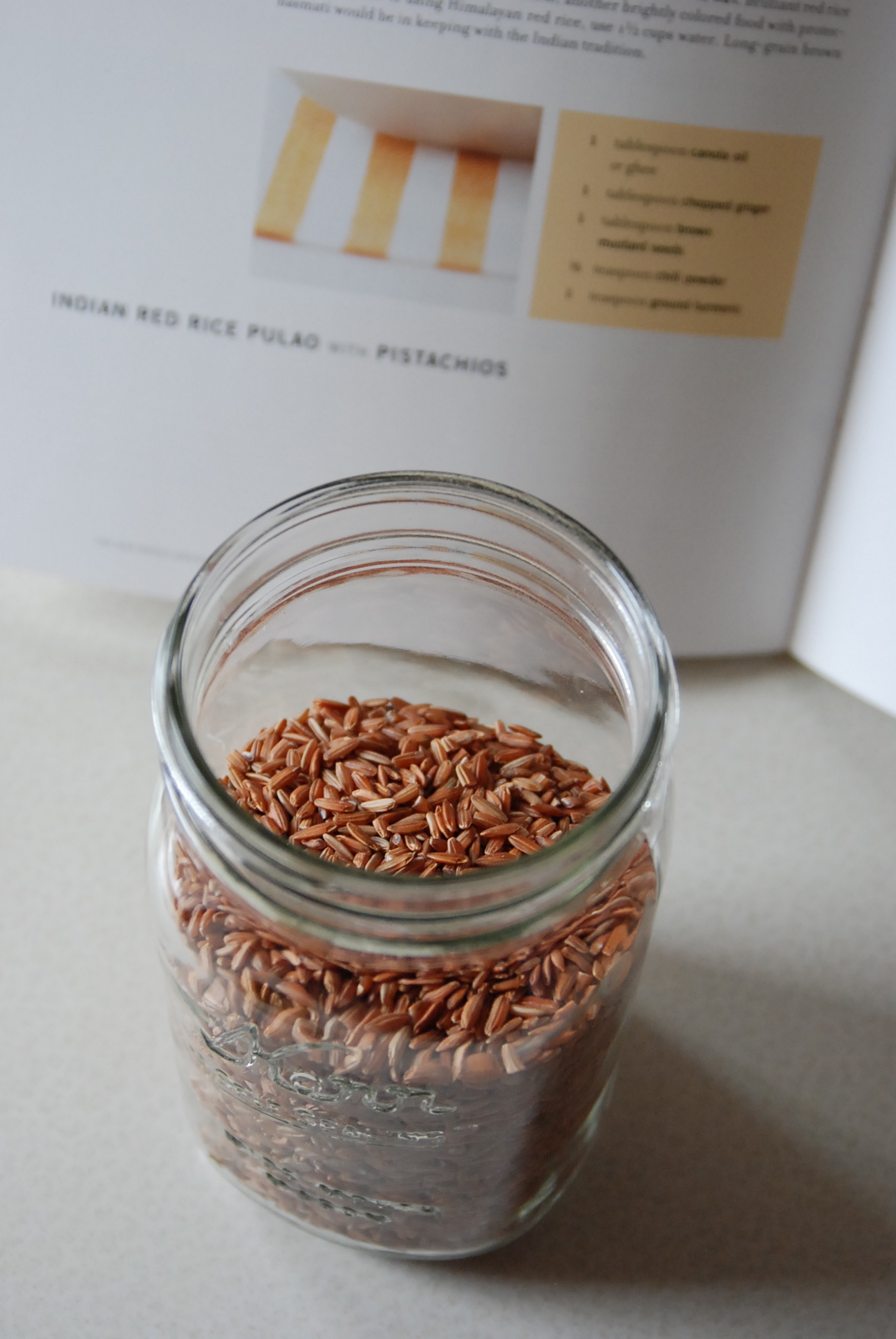
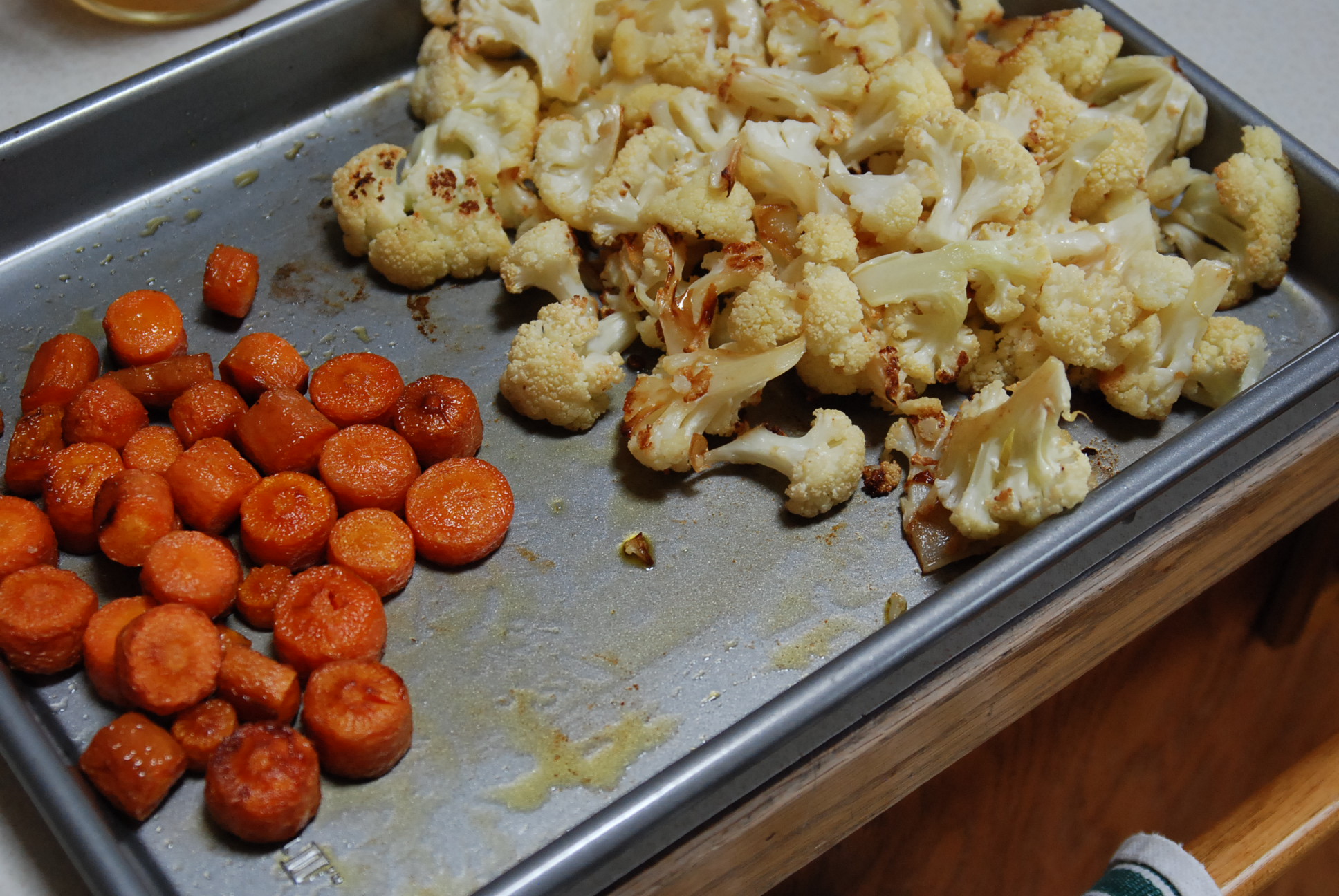
Task-wise, this has a few moments of chopping and prep, but largely you are passing a great deal of idle time as rice simmers, and vegetables roast, while heady fragrances take over your home. This isn’t high-tech stuff here; with the heat of an oven and the magic alchemy of boiling water with rice, you can make an exceptional dish that tastes far more grand than it’s humble beginnings. If you’re unfamiliar with red rice, it’s an intensely chewy rice, often found labeled as Himalayan Red Rice, or Wehani. Properly cooked, it takes up to an hour, all hands off. Finished, it’s a really hearty and satisfying grain, deeper in flavor than brown rice, not as earthy as wild rice. This dish is easily a main course, or can be eaten as a side with any number of proteins. I can vouch that it’s especially good with grilled pork tenderloin. Here’s where you get to decide what you do with this recipe, because if you want, outside of making the rice you can experiment wildly, with everything else. Instead of carrots and cauliflower, add whatever vegetables you have on hand, or swap almonds, walnuts, pecans or peanuts for the pistachios. This is your base, and when you read through it, your tastes will direct you, just as they should. Trust those instincts. And enjoy.
|